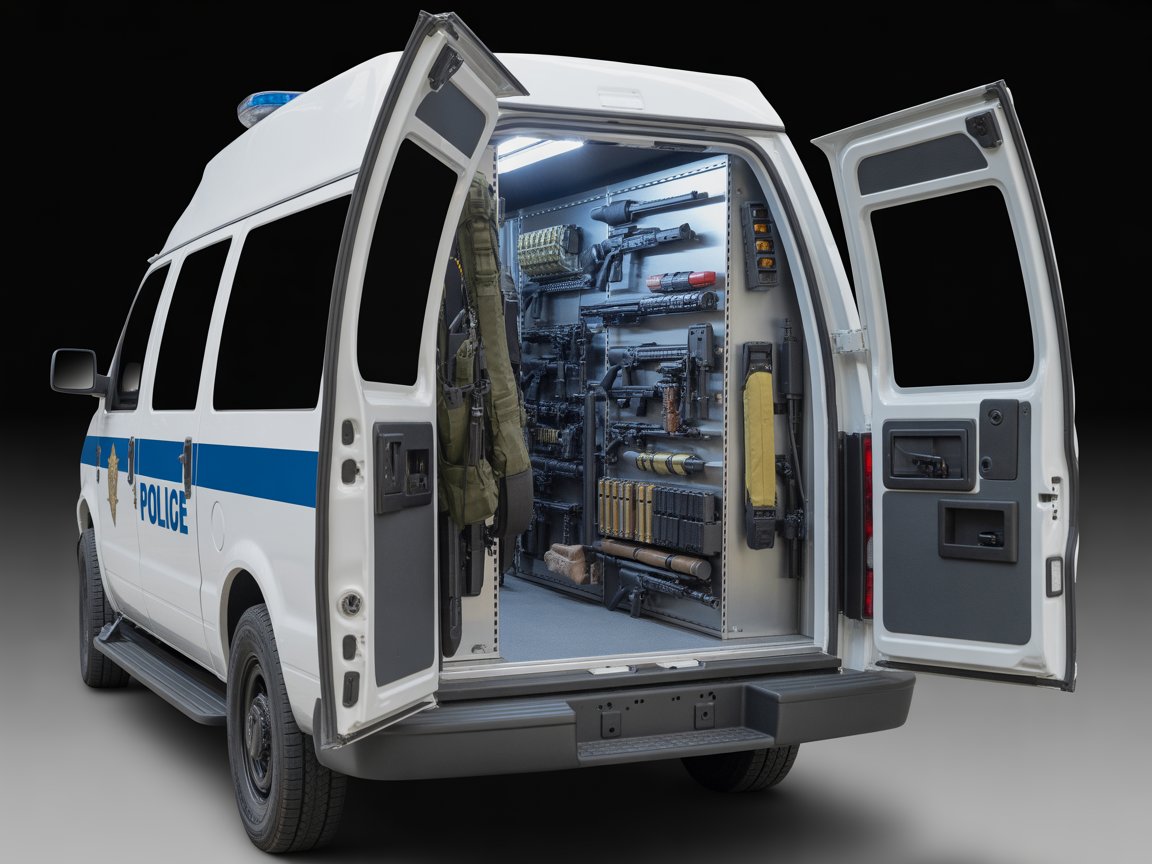
Weapon storage vault fabrication is one of the most critical elements in emergency and tactical vehicle builds. A properly fabricated vehicle weapon vault has to protect equipment, secure officers, and still allow fast access when every second matters.
OCM Upfitting has built a reputation for designing heavy-duty weapon storage systems that work in the real world. These vaults are installed in patrol vehicles, tactical trucks, command units, and government fleets where firearms and high-risk equipment need more than a lockbox — they need a purpose-built solution.
Many departments and fleet managers underestimate what goes into a secure weapon vault build. Unlike commercial storage drawers or generic aftermarket racks, weapon vault systems are engineered from the ground up. They must withstand impact, vibration, climate exposure, and attempted tampering. They also need to integrate with vehicle power systems, seat layouts, interior consoles, and emergency lighting without interfering with operations or safety.
In the upfitting world, a fleet upfitting company that fabricates these vaults in-house has a major advantage. By controlling measurements, materials, welding, coatings, mount design, and lock integration, quality becomes consistent and installation is cleaner, faster, and safer. fleet upfitting company
In the second stage of design, the biggest priority is safety — not just keeping weapons secure, but making sure the storage system itself doesn’t create hazards, distractions, or structural weaknesses inside the vehicle. The best vaults blend security with practicality. They lock tight, but they open smart.
Start With the Right Structure
The base of every weapon vault is the structural shell. Most high-performing emergency and tactical vaults are built using aluminum or stainless steel frameworks. Aluminum is lighter, corrosion-resistant, and easier to fabricate without adding unnecessary vehicle weight. Stainless steel is ideal in sections where locking systems and hinges require maximum strength.
A solid structure alone isn’t enough. The vault must be precision mounted to the vehicle frame or reinforced floor sections, especially in SUVs and pickup fleets that see rough terrain. Bad mounts lead to rattling, metal fatigue, and long-term alignment issues that eventually cause locks to fail or doors to jam. That’s why experienced shops like OCM Upfitting always mock-fit and test vehicle-specific brackets before final installation.
The vault frame also needs rounded or flange-protected edges at all contact points, preventing cuts, snags, and uniform damage. Many shops skip these details, but customers notice when parts are poorly finished.
Built for Impact and Vibration
Emergency vehicles are constantly in motion, often at high speed, over unpredictable roads, and during abrupt maneuvers. A weapon vault has to survive what the vehicle goes through without shifting, squeaking, or loosening.
Look for features like:
-
Reinforced backplates behind mounts to distribute force
-
Anti-vibration dampening washers
-
Rattle-proof interior cradles or brackets
-
Impact-tested locking rods and latch housings
-
Anchored internal weapon rack partitions
A poorly built vault doesn’t just risk a weapon shifting — it risks an officer getting distracted by noise or dealing with a jammed locking bolt mid-response. Well-engineered vaults stay quiet and stable, even during long shifts.
Corrosion and Weather Resistance
Even though weapon vaults are interior installations, they still face humidity, sweat-caused salts, equipment hydration, ocean air (especially in coastal states like Florida), and temperature changes when doors open during storms.
Professional vault fabrication includes:
-
Powder-coated aluminum or vault plating
-
Stainless steel hardware upgrades
-
Sealed welds
-
Weather-treated locking cores
-
Rust-proof hinge assemblies
This is especially important for fleet vehicles that rotate across officers or operate in humid regions where moisture buildup is common.
Smart and Safe Access Placement
A vault that can’t be reached quickly is useless, and a vault that interferes with driving is dangerous. The best weapon vaults are placed where officers can reach without taking eyes off the road or twisting into unsafe positions.
Standard real-world placement zones include:
-
Rear cargo area for rifles, shotguns, and tactical gear
-
Behind front seats with reinforced partitions when necessary
-
Side-accessible vault doors in command and rescue vehicles
-
Trunk or rear-gate-aligned access for fast reach during traffic stops or scene arrivals
Vault doors should open toward a safe exit angle, meaning the direction should support natural movement while exiting the vehicle, not against it.
This is one area where custom shops outperform generic installs. Every vehicle interior is different — cargo space depth, seat clearance, positioning of MDTs, radios, and console structures all shift layout dynamics.
Locking Mechanisms That Actually Work
The heart of any weapon vault is its lock system. There are several lock types used today, but not all perform equally once installed in vehicles.
1. Mechanical Rotary or Slam Locks
These are simple and highly reliable but must be engineered correctly. They use internal rods that rotate or slam into reinforced receivers. They’re less likely to fail because they don’t depend on electronics.
2. Key-Operated High-Security Cores
These lock cylinders are tougher than regular door cores, often using anti-pick designs for enhanced protection. They must be mounted inside protected lock housings to prevent drilling or core snapping.
3. Electronic or Solenoid-Controlled Vault Locks
These are popular because they allow smart control or integration with vehicle systems, but they must have manual override options. A dead battery should never equal a locked weapon vault with no access.
4. Dual-Lock Redundancy
The best fleet and department vault builds use two-layer lock systems — for example, an internal mechanical core backed with an electronic trigger or secondary latch. This covers failure scenarios while still allowing quick access.
Security Without Compromising Speed
A weapon vault has to strike a difficult balance: maximum security, zero delay in access. Unlike construction storage bins or regular fleet cabinet installs, weapon vaults must protect under worst-case scenarios — rollovers, attempted theft, or unauthorized access attempts — without sacrificing the ability for authorized users to deploy weapons instantly.
This is why top-tier upfitting shops include:
-
Manual override for electric locks
-
Reinforced lock receivers and rods
-
Tamper-protected lock cores
-
Smart access ergonomics
-
Custom vehicle-specific layouts
-
Anti-blur vision lighting around vault access points
-
Safety partitions when necessary
Final Checks Before Deployment
Before any vault is approved for delivery, it should go through:
-
Force-pull testing
-
Lock core stress testing
-
Vehicle drive vibration testing
-
Attempted access simulation under low power
-
Safe reach and exit access testing for officers in full gear
-
Alignment and clearance checks
-
Edge safety inspection
-
Failsafe confirmation
A responsible upfit shop doesn’t guess — it tests.
Bottom Line
Custom weapon storage vault fabrication isn’t optional for mission-critical fleets. It determines how safe officers are, how secure weapons stay, and how fast teams can respond without equipment failure getting in the way.
A shop that builds these vaults in-house delivers better fits, cleaner wiring, quieter operations, and stronger security. OCM Upfitting understands these demands because we build for the field, not the showroom.