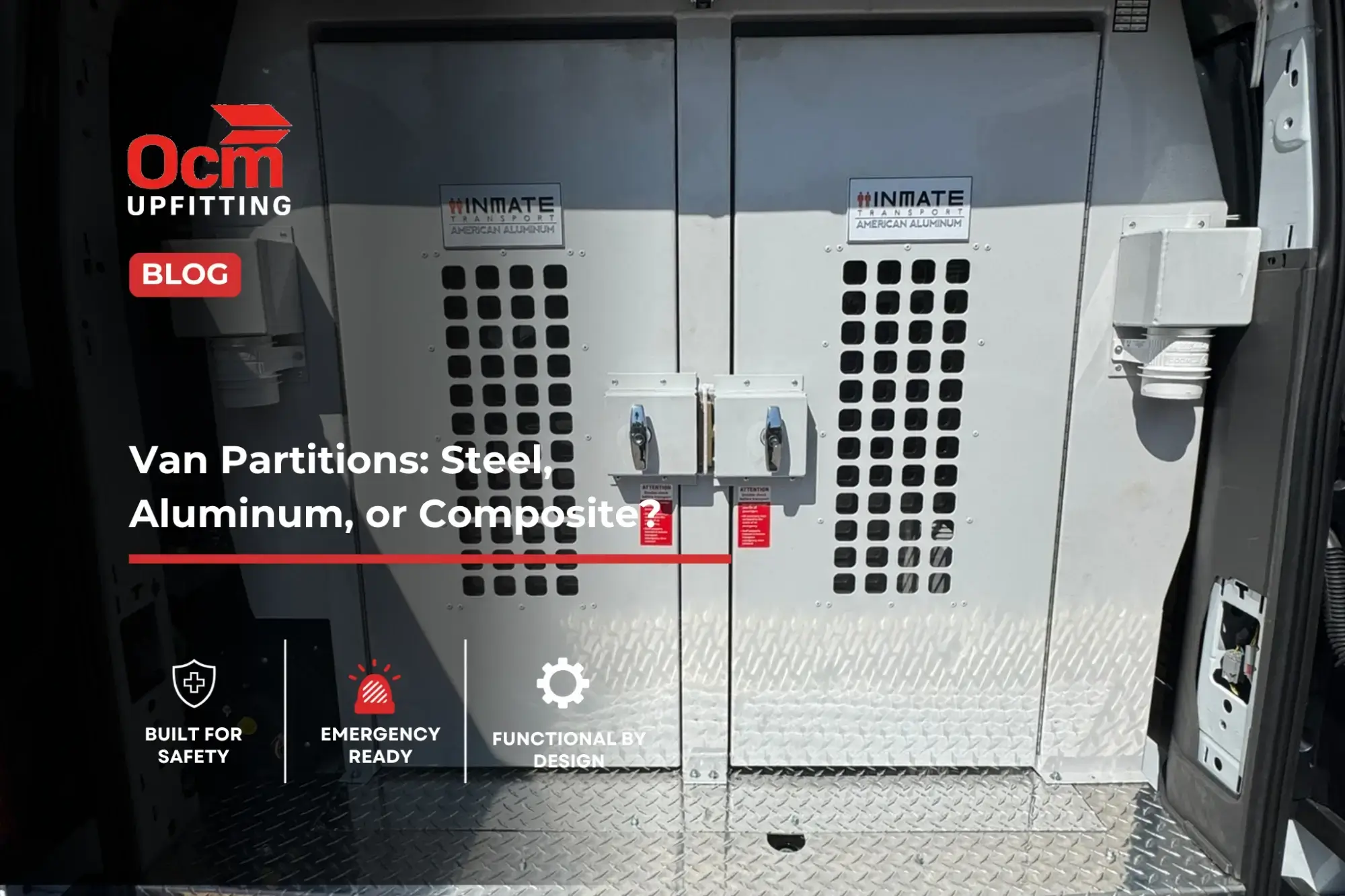
Choosing the Right Partition for Safety and Productivity
A commercial van partition is more than a wall between the cab and cargo area. It can help protect occupants from shifting tools, separate valuable equipment, improve climate control, and reduce driver fatigue caused by cargo noise. For fleet managers, municipalities, contractors, school districts, utility fleets, and law enforcement agencies, the right system supports safer work and more productive routes.
The best van partitions depend on cargo weight, impact risk, payload, visibility, seat travel, vehicle dimensions, and future storage plans. Steel may be better for demanding cargo, while aluminum or composite can preserve payload and improve cabin comfort. OCM Upfitting evaluates the complete operating environment before recommending a professional vehicle partition installation from its Fort Lauderdale facility.
What Does a Commercial Van Partition Do?
A cargo van partition creates a physical barrier between the driver compartment and load area. It can limit forward cargo movement, discourage access to valuable equipment, reduce noise, and create a cleaner mobile workspace. A solid commercial van bulkhead may also reduce the space the vehicle’s heating and cooling system must manage.
A partition does not replace secure storage or restraints. The FMCSA cargo securement rules require applicable commercial vehicle cargo to be contained, immobilized, or secured against shifting. Treat the work van divider, tie-down points, bins, shelving, and restraints as one coordinated safety system.
Steel, Aluminum, and Composite Materials
Steel Van Partition
A steel van partition is often the strongest starting point for dense tools, pipe, machinery, cylinders, or heavy replacement parts. It offers high impact resistance for municipal, plumbing, construction, and demanding delivery applications. Options include solid, perforated, windowed, and door-equipped models.
The tradeoff is weight. A heavier commercial van bulkhead consumes payload and may transfer more vibration into the cab. Proper coatings and installation help limit corrosion. Fleet managers can also review how to balance upfit weight and durability before choosing materials.
Aluminum Partition
Aluminum is lighter than comparable steel, resists corrosion, and leaves more capacity for shelving, tools, parts, or packages. It suits HVAC companies, electricians, mobile technicians, coastal fleets, and high-mileage service operations.
Thickness, reinforcement, mounting design, and installation quality still determine performance. An aluminum cargo van partition may not be the best choice for extremely heavy or irregular equipment.
Composite Van Partition
A composite van partition prioritizes low weight, corrosion resistance, cabin appearance, and noise control. It can suit parcel delivery, telecommunications, and light-service fleets whose technicians spend long hours in the vehicle.
Impact performance varies by product. A composite van partition should be selected for the actual cargo risk, and any pass-throughs or accessories must use compatible hardware.
Solid, Mesh, Windowed, or Door-Equipped?
A solid work van divider offers strong cargo concealment, climate separation, and potential noise reduction, but it may restrict airflow and rearward visibility. Wire mesh improves airflow and visibility but offers less sound isolation and concealment.
Windowed models balance separation with better sightlines, while hinged or sliding doors help technicians reach the cargo area without exiting. Access doors may be especially valuable for mobile technicians working in rain, traffic, restricted parking areas, or secure locations.
Consider how employees load tools, access inventory, park, and move through the van. OCM Upfitting’s fleet van upfitting guide explains how layout affects safety, organization, productivity, and long-term operating costs.
Eight Factors Fleet Decision-Makers Should Compare
- Payload: Every partition, shelf, rack, and floor adds weight. NTEA’s vehicle weight calculation resources support careful commercial upfit planning.
- Cargo risk: Parcels create a different exposure than compressors, pipe, generators, cylinders, or heavy tools. Higher impact risk may justify a reinforced steel van partition.
- Corrosion: Humidity, coastal air, chemicals, and wet equipment affect material, coating, and mounting-hardware choices.
- Visibility: Determine whether drivers need a window, mesh panel, rear camera, digital mirror, or cargo-monitoring system.
- HVAC airflow: A solid commercial van bulkhead can isolate the cab, while mesh or vented designs permit more airflow.
- Noise: Composite and insulated solid systems may reduce rattling better than open mesh. Secure shelving and properly restrained tools also help control noise.
- Seat travel: The installation must preserve safe recline, legroom, headroom, and access for drivers of different sizes.
- Future equipment: Address shelving depth, flooring, wiring, airbags, access doors, and planned accessories before drilling or mounting.
Plan the Full Upfit Before Installation
Do not select a work van divider as an isolated product. OCM Upfitting can review cargo hazards, vehicle capacity, technician movement, and future shelving before creating a fleet upfitting specification.
Fleet managers in Fort Lauderdale and organizations operating nationally can call +1 954-764-8117 for a vehicle or fleet assessment.
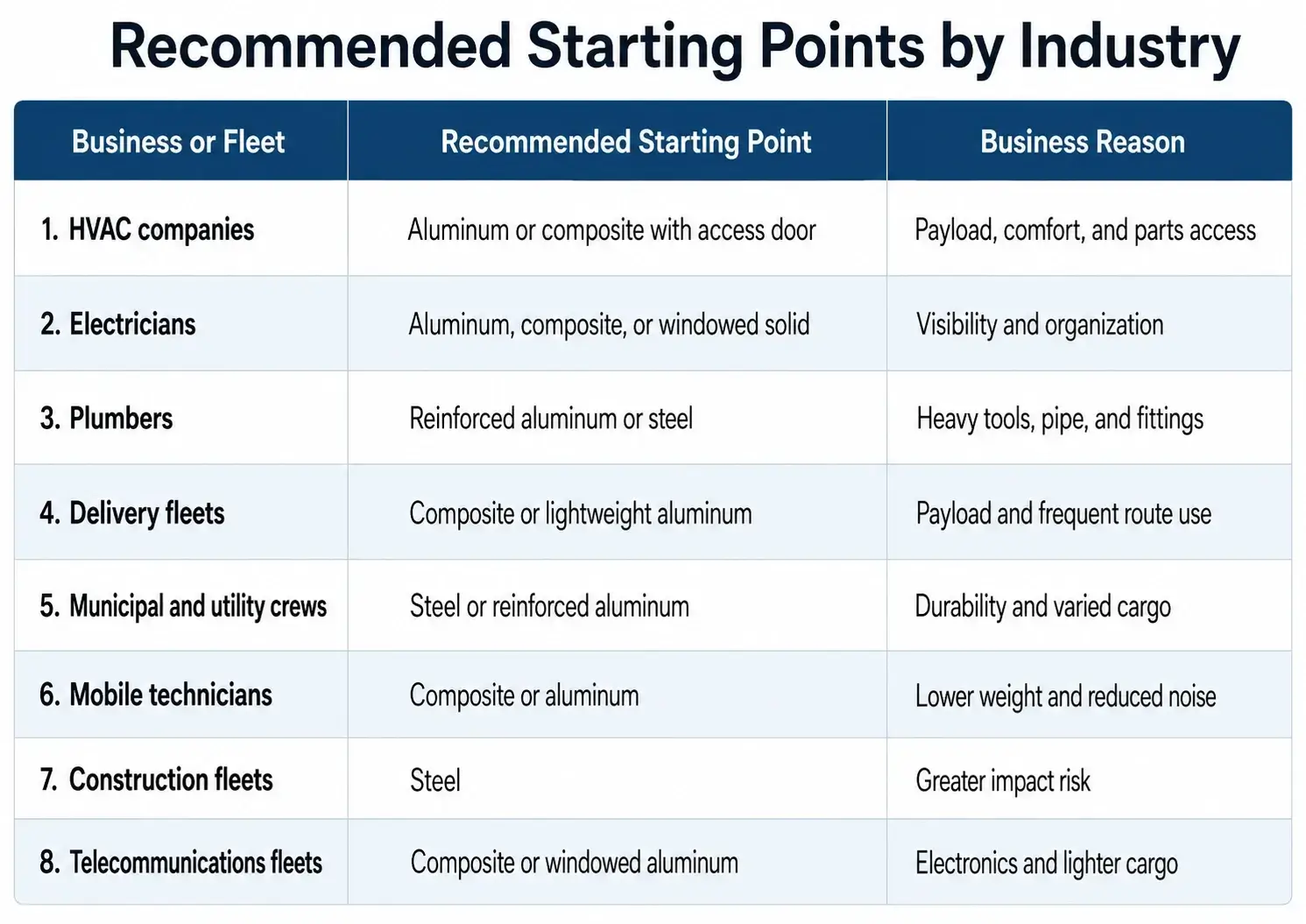
These are starting points, not universal specifications. OCM Upfitting has described a Fort Lauderdale HVAC contractor that reduced time spent searching for fittings and making repeat supply runs after improving van storage organization. The lesson is that a cargo van partition, shelving, and access plan should reflect the technician’s real workflow.
HVAC companies and service contractors can explore related HVAC van upfitting solutions for storage, racks, and fleet equipment planning.
Vehicle Fit Matters
Ford Transit, Ram ProMaster, Mercedes-Benz Sprinter, Chevrolet Express, GMC Savana, and other cargo vans have different roof heights, wheelbases, body contours, seat clearances, mounting points, and payload ratings.
For a Ford Transit, check current Ford Pro upfitter publications and confirm the exact roof and wheelbase. For a Ram ProMaster, review model-specific dimensions, payload data, electrical systems, safety requirements, and mounting guidance. Mercedes-Benz provides an official Sprinter upfitting portal with technical resources for vehicle modifications.
Traditional cargo vans often have tighter cab space than high-roof models. A correctly fitted commercial van bulkhead should preserve seat movement, avoid interference with factory safety systems, and integrate cleanly with flooring, walls, shelving, and storage.
Choose the Right Van Partitions With OCM Upfitting
Choosing van partitions by price alone can create payload problems, restricted seat travel, excess noise, poor airflow, or conflicts with future storage. OCM Upfitting evaluates vehicle size, cargo movement, driver workflow, climate needs, and expansion plans before recommending the correct material and configuration.
From its Fort Lauderdale headquarters, the team supports contractors, municipalities, utilities, school districts, commercial operators, and public safety fleets across the nation.
Request a custom van upfitting consultation or call +1 954-764-8117 to build a safer, organized, and more productive mobile workspace.
Frequently Asked Questions
Are steel partitions always safer?
Not automatically. Steel usually offers greater impact resistance, but safety also depends on product design, cargo risk, mounting quality, vehicle fit, and proper cargo restraints.
Will a partition reduce cargo noise?
A solid or composite system can reduce noise, especially when paired with insulation and secure shelving. Wire-mesh systems generally provide less sound isolation.
Can a partition include a window or access door?
Yes. Windows, mesh panels, hinged doors, and sliding pass-throughs are available for many vehicle configurations. Selection should consider visibility, security, airflow, workflow, and vehicle fit.
Should the partition be installed before shelving?
The entire layout should be planned first. Partition position, shelf depth, flooring, wiring, doors, and technician access can affect one another.