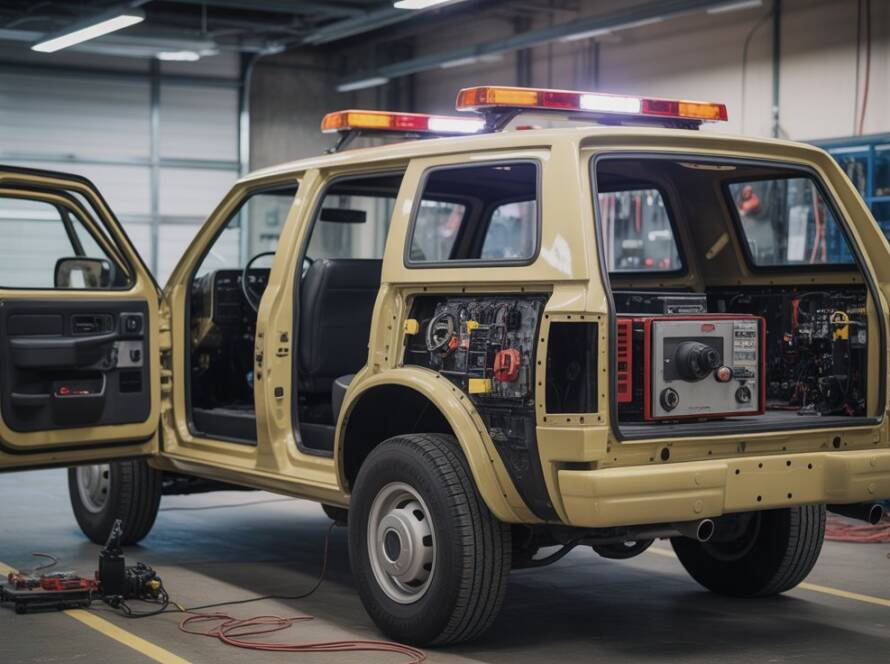
Maintenance of upfit systems and an effective inspection checklist are critical for ensuring the durability and long-term upfit upkeep of your fleet. Vehicle modifications are not just add-ons—they’re essential tools that support law enforcement, emergency response, utility services, and commercial operations. Without regular inspection and maintenance, these enhancements can lose performance, create safety risks, and lead to costly downtime.
At National Upfitting, we understand that every fleet relies on dependable equipment. Whether you operate a few work trucks or a full-scale emergency response fleet, having a structured approach to maintaining your upfitted equipment is just as important as the initial installation. Our expertise in commercial law enforcement vehicle upfitting gives us a unique perspective on the importance of upkeep in mission-critical vehicles.
Why Regular Upfit Maintenance Matters
Fleet vehicles work in high-demand environments. Sirens, lighting systems, storage solutions, and mounted equipment all endure constant wear and exposure to elements like dust, water, and vibration. When these components fail, it’s not just an inconvenience—it could jeopardize operator safety, compliance, and the effectiveness of your operation.
Routine maintenance provides benefits such as:
-
Enhanced durability: Extends the lifespan of upfitted components.
-
Improved safety: Ensures that lighting, sirens, and storage systems perform as intended.
-
Lower costs: Prevents expensive breakdowns and unplanned downtime.
-
Compliance assurance: Keeps vehicles aligned with industry regulations and safety standards.
Building an Effective Inspection Checklist
The foundation of upfit upkeep is a clear, repeatable inspection process. Below is a structured checklist that can be adapted for different types of fleets:
1. Electrical Systems
-
Test all emergency lighting, sirens, and directional warning systems.
-
Inspect wiring for frays, corrosion, or loose connections.
-
Confirm backup batteries or power supply units are fully functional.
2. Structural Equipment
-
Examine mounting brackets, cages, and K9 unit enclosures for cracks or loosened bolts.
-
Check shelving and storage systems for alignment, wear, or overloading.
-
Verify that partitions and safety barriers are secure.
3. Environmental Systems
-
Inspect climate control systems for K9 units or refrigerated compartments.
-
Ensure ventilation fans are working correctly.
-
Check seals on doors and compartments for leaks.
4. Safety Accessories
-
Test seatbelt extenders, safety harnesses, and specialized seating.
-
Verify visibility of decals, reflectors, and light covers.
-
Inspect siren speakers and PA systems for clarity.
5. General Vehicle Integration
-
Confirm that added systems do not interfere with the vehicle’s base functions.
-
Ensure load distribution is balanced for stability.
-
Document mileage and usage to schedule proactive servicing.
Maintenance Frequency Recommendations
The frequency of inspection depends on the intensity of use and the industry served. Here are general guidelines:
-
Law enforcement fleets: Bi-weekly or monthly inspections due to constant use and high safety demands.
-
Utility and service vehicles: Monthly inspections, with quarterly deep evaluations.
-
Emergency response fleets: Weekly quick checks plus comprehensive monthly inspections.
-
Commercial fleets: Monthly reviews with preventive replacement of high-wear parts.
Durability and Long-Term Upfit Upkeep
Maintaining durability requires both proactive and reactive approaches:
-
Proactive: Replace components nearing their service life before failure. For example, rotating light modules or upgrading outdated sirens.
-
Reactive: Immediate repairs when inspections uncover a fault, preventing small issues from escalating.
-
Training: Drivers and operators should be trained to recognize warning signs, such as dimming lights or rattling mounts.
-
Documentation: Keep detailed maintenance logs. This not only ensures accountability but also supports warranty claims and resale value.
When fleets follow these principles, their vehicles remain reliable assets rather than liabilities.
Partnering with Professionals
While internal teams can handle routine inspections, professional upfitters like National Upfitting provide expert servicing, access to certified parts, and knowledge of industry standards. Professional inspections can uncover issues that daily users may overlook, ensuring your fleet operates at maximum efficiency.
Final Thoughts
A reliable fleet doesn’t end with installation—it’s built through consistent attention to detail and proper maintenance. By creating and following a structured inspection checklist, operators can maximize the durability and performance of their upfitted vehicles. Investing in upfit upkeep ensures safety, compliance, and peace of mind for every mission, job site, or service call.
Don’t wait until equipment failure slows down your fleet. Ensure your vehicles stay mission-ready with expert inspections and servicing from National Upfitting. Our certified technicians are available to keep your fleet operating at peak performance.
? Book your appointment today with our team or call to schedule a professional upfit inspection and maintenance service.