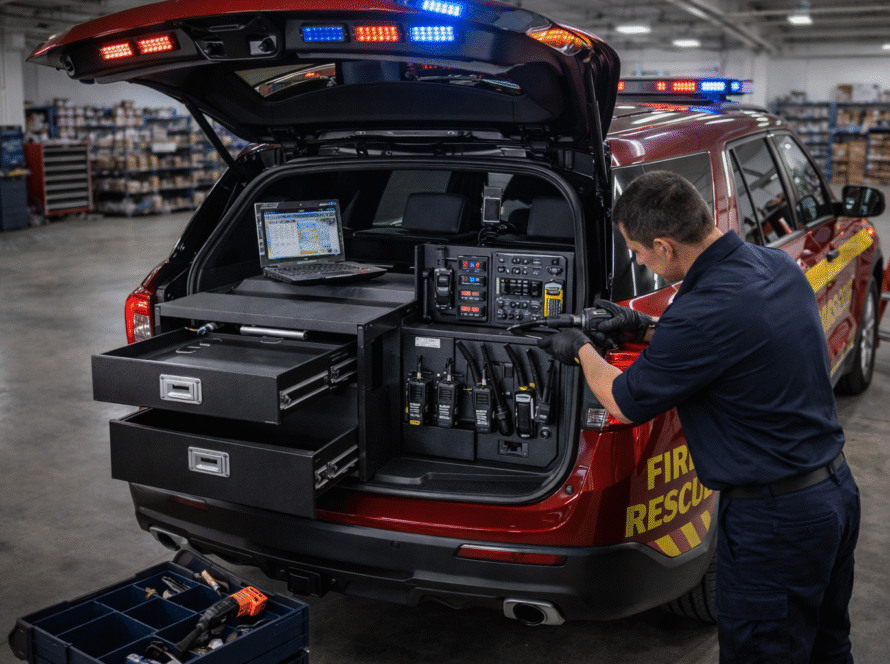
Radio interference prevention is one of the most critical and often overlooked elements of modern fleet vehicle tech integrations. Emergency response vehicles, tactical units, and service fleets depend on clear, uninterrupted communication to operate safely and effectively. When radios suffer from static, dropped signals, or distorted audio, the results can delay response times and put personnel at risk.
As fleet vehicles become more technologically advanced, the number of onboard electronic systems continues to grow. Radios now operate alongside light bars, sirens, mobile data terminals, cameras, GPS systems, and power management modules. Without proper planning and professional integration, these systems can interfere with one another, leading to unreliable communication when it matters most.
What Causes Radio Interference in Fleet Vehicles
Radio interference occurs when unwanted electrical noise disrupts radio signals. In upfitted vehicles, interference typically comes from internal sources rather than outside radio traffic.
Common causes include:
-
Poor grounding of electronic components
-
Improper cable routing near power lines
-
Low-quality or damaged coaxial cables
-
Overloaded power systems
-
Incompatible electronic devices sharing circuits
Each added system increases the chance of interference if not installed correctly. That’s why radio interference prevention must be addressed as part of the overall tech integration process—not as an afterthought.
The Impact of Interference on Emergency Operations
In emergency and tactical vehicles, communication failures are not minor inconveniences. Static-filled transmissions, delayed dispatch updates, or dropped signals can compromise officer safety and coordination.
Interference can cause:
-
Missed calls or unclear dispatch instructions
-
Reduced radio range
-
Cross-talk between systems
-
Increased operator frustration and distraction
Reliable communication is essential for command, coordination, and situational awareness. Preventing interference ensures that every system functions as intended, even during high-stress operations.
Proper Grounding: The Foundation of Interference Prevention
One of the most effective ways to prevent radio interference is proper grounding. Every electronic component in a fleet vehicle must share a common, solid ground point. Inconsistent grounding creates electrical noise that interferes with radio signals.
Professional installers use grounding straps, bonding techniques, and verified ground points to ensure electrical stability. Skipping or rushing this step often leads to persistent interference problems that are difficult to diagnose later.
Smart Cable Routing and Separation
Cable routing plays a major role in radio performance. Radio cables should never run parallel to high-current power lines, siren wiring, or lighting circuits. When cables are bundled incorrectly, electrical noise can bleed into radio systems.
Best practices include:
-
Keeping radio coaxial cables as short as possible
-
Separating communication cables from power wiring
-
Avoiding sharp bends and pinch points
-
Using shielded cables where necessary
Clean, intentional cable routing not only reduces interference but also improves long-term reliability and serviceability.
Power Management and Load Control
Modern fleet vehicles draw significant electrical power. Light bars, computers, radios, cameras, and charging systems all compete for energy. When power systems are overloaded or poorly distributed, voltage fluctuations can interfere with radio operation.
Using dedicated power distribution modules, voltage regulators, and circuit protection ensures stable power delivery. These systems isolate sensitive communication equipment from high-draw components, preventing noise and signal degradation.
Equipment Compatibility and System Planning
Not all electronic components are designed to work together. Mixing incompatible brands or technologies can introduce interference issues, especially when systems operate on similar frequencies.
Professional tech integration begins with system planning. This includes:
-
Selecting compatible radios and accessories
-
Assigning separate circuits for sensitive equipment
-
Testing system performance before final delivery
This proactive approach eliminates guesswork and ensures every system operates without conflict.
Shielding and Noise Suppression Techniques
In some cases, additional shielding or noise suppression is required. Ferrite chokes, filters, and shielded enclosures help absorb unwanted electrical noise before it reaches radio components.
These solutions are especially useful in vehicles with multiple radios or specialized tactical equipment. Proper application requires experience, as incorrect placement can reduce effectiveness or create new issues.
Testing and Verification Before Deployment
Interference prevention doesn’t end after installation. Every upfitted vehicle should undergo performance testing to verify radio clarity under real operating conditions.
Testing may include:
-
Engine-on and engine-off radio checks
-
Lighting and siren activation tests
-
Data terminal and camera operation checks
-
Range and clarity verification
Identifying issues early ensures vehicles are fully operational before entering service.
Why Professional Tech Integration Matters
Radio interference prevention is not a DIY task. It requires technical knowledge, experience, and attention to detail. Professional upfitting teams understand how each system interacts and how to design installations that work as a cohesive unit.
At OCM Upfitting, tech integrations are approached holistically. Every radio, antenna, power system, and accessory is installed with performance, safety, and reliability in mind.
Conclusion
Radio interference prevention is essential for maintaining dependable communication in modern fleet vehicles. With proper grounding, cable routing, power management, and professional integration, agencies can eliminate signal disruptions and ensure their teams stay connected in every situation.
If your fleet is experiencing communication issues—or you’re planning a new vehicle build—OCM Upfitting delivers expert tech integration solutions designed for real-world demands.
? Ready to eliminate radio interference and improve fleet communication? Book your appointment today to speak with our tech integration specialists, or call (954) 764-8117 to get your vehicle systems installed the right way.