Why Directional Warning Lights Are Essential for Fleet Safety
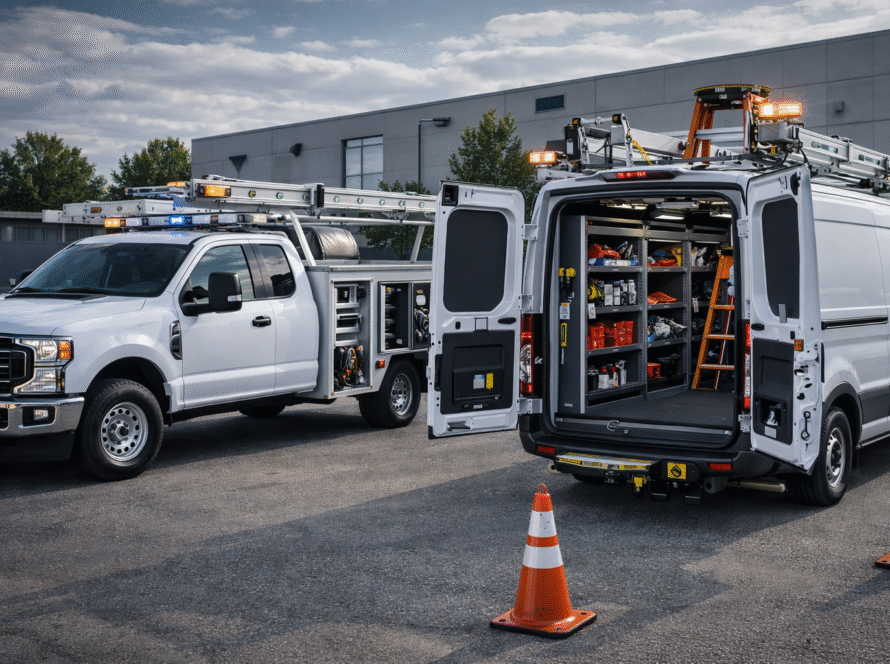
Every time a fleet vehicle stops near moving traffic, worker safety becomes a top priority. Whether it’s a utility truck repairing power lines, a tow truck assisting a stranded motorist, or a construction vehicle managing a work zone, approaching drivers need clear guidance to navigate safely. Flashing warning lights help attract attention, but they don’t always communicate what motorists should do next.
That’s where traffic advisor light bars make a difference. Unlike standard warning lights, these systems display directional arrow patterns that guide drivers to merge left, merge right, or proceed cautiously around a stopped vehicle or active work area. This added level of communication helps reduce confusion, improve traffic flow, and protect crews working near live traffic.
For fleet managers, investing in the right lighting system isn’t just about meeting operational needs—it’s about reducing liability, improving roadside safety, and supporting compliance with industry safety standards. OCM Upfitting designs and installs professional lighting solutions that help commercial fleets operate more safely and efficiently. From utility trucks and service vans to emergency response vehicles and municipal fleets, our vehicle upfitting services help businesses build dependable warning systems tailored to their operations.
What Are Traffic Advisor Light Bars?
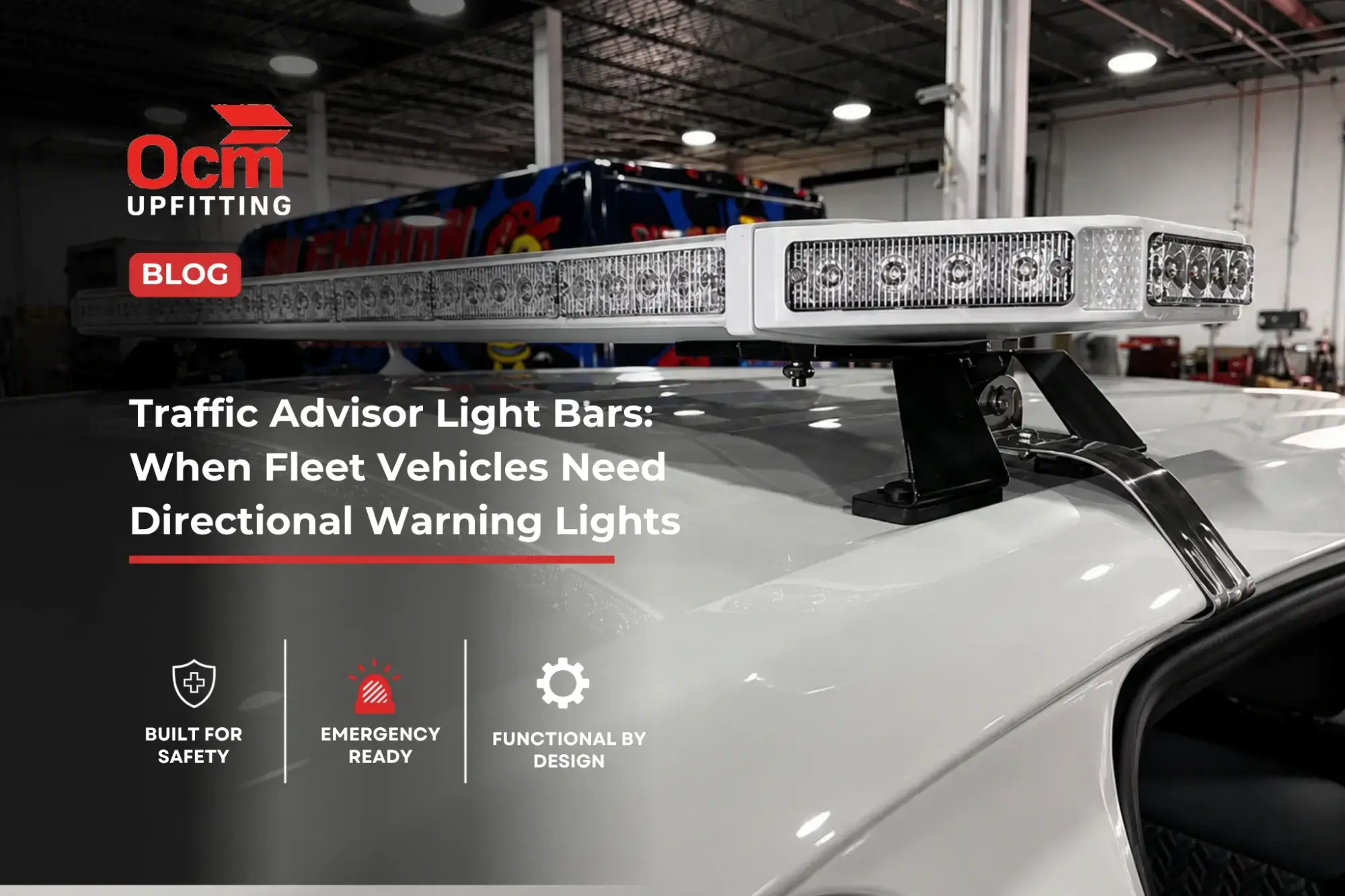
Traffic advisor light bars are specialized LED warning systems designed to direct traffic around stopped or slow-moving vehicles. Rather than simply flashing to increase visibility, they display sequential lighting patterns that clearly communicate how approaching drivers should move around a work zone or roadside incident.
Common directional patterns include:
- Left arrow
- Right arrow
- Center-out arrow
- Split arrow
- Flashing caution mode
These patterns improve driver awareness while helping crews create safer work environments during roadside service, lane closures, emergency response, and construction activities.
Traffic advisor light bars are commonly installed on:
- Utility trucks
- Service vans
- Tow trucks
- Construction vehicles
- Law enforcement vehicles
- Security patrol vehicles
- Municipal fleet vehicles
- Fire rescue apparatus
Some fleets rely on a standalone rear-facing traffic advisor, while others integrate directional warning lights with roof-mounted light bars, grille lights, and auxiliary warning systems for maximum visibility.
Fleet managers evaluating complete emergency lighting packages can also explore OCM Upfitting’s guide to Full-Length Roof Light Bars for Pursuit Fleets to understand how directional lighting complements 360-degree vehicle visibility.
How Traffic Advisor Light Bars Improve Fleet Safety
The primary purpose of a traffic advisor is to communicate clearly with approaching motorists.
General flashing lights tell drivers that a vehicle is present, but directional warning lights instruct drivers how to safely navigate around that vehicle. This distinction is especially important on busy highways, urban streets, construction zones, parking facilities, and roadside service calls where split-second decisions affect worker safety.
For example, a utility truck performing maintenance on a busy roadway can activate a left-arrow pattern, encouraging drivers to merge away from the work area well before reaching the vehicle. This early visual guidance helps reduce sudden lane changes, minimizes close calls, and creates a safer environment for workers outside the vehicle.
Traffic advisor light bars are especially valuable during:
- Highway shoulder repairs
- Utility maintenance
- Road construction
- Traffic incident management
- Emergency response
- Roadside assistance
- Parking lot traffic control
- Municipal service operations
The OSHA Highway Work Zone Safety guidance emphasizes the importance of protecting workers exposed to moving traffic through proper traffic control measures and visibility practices.
Beyond improving worker safety, effective warning systems also help reduce downtime caused by traffic incidents, improve operational efficiency, and reinforce a fleet’s commitment to workplace safety.
Traffic Advisor Light Bars vs. Full-Length Roof Light Bars
Although both lighting systems improve vehicle visibility, they serve different purposes.
Full-length roof light bars provide 360-degree warning visibility, making them ideal for emergency response, patrol vehicles, road closures, and municipal fleets that need to be seen from every direction.
Traffic advisor light bars, on the other hand, focus on rear-facing directional communication. Their primary function is guiding approaching motorists safely around stopped vehicles, helping reduce confusion during roadside operations.
Many organizations benefit from using both systems together. Law enforcement agencies, towing companies, utility providers, and construction fleets often combine full-length roof lighting with directional traffic advisors to maximize both visibility and traffic control.
To better understand how multiple warning systems work together, fleet managers can review OCM Upfitting’s Roof Light Bars and Take-Down Lights Configuration Guide before selecting the best lighting package for their vehicles.
Best Fleet Applications for Traffic Advisor Light Bars
Traffic advisor light bars are valuable across many industries because they provide clear directional guidance whenever vehicles stop near active traffic. Choosing the right lighting configuration depends on how and where your fleet operates.
Common applications include:
- Law Enforcement: Traffic stops, incident response, lane closures, and accident scenes.
- Utility Fleets: Electrical, telecommunications, water, and gas service vehicles working along busy roads.
- Construction Vehicles: Temporary traffic control, roadwork, equipment staging, and infrastructure projects.
- Tow Trucks and Roadside Assistance: Vehicle recovery, tire changes, fuel delivery, and emergency roadside service.
- Security Fleets: Parking lots, event traffic management, campuses, and commercial facilities.
- Municipal and Public Works Vehicles: Street maintenance, sanitation, landscaping, and public utility operations.
For businesses operating specialized commercial vehicles, OCM Upfitting designs custom lighting solutions that improve visibility while integrating seamlessly with other vehicle upfitting services.
Key Features to Consider Before Installation
Not every traffic advisor light bar offers the same level of performance. Fleet managers should evaluate both operational needs and long-term durability before selecting a system.
Important features include:
- High-intensity LED modules
- Multiple directional arrow patterns
- Wide viewing angles
- Weather-resistant housing
- Low power consumption
- Programmable controllers
- Durable mounting hardware
- Compatibility with existing warning lights
Another important consideration is lighting color. Amber lights are commonly used for utility, construction, towing, and service fleets, while red and blue lighting may be restricted to authorized emergency vehicles depending on state regulations.
Selecting the proper configuration helps improve visibility while supporting compliance with applicable laws.
Mounting Location and System Integration Matter
Even the best traffic advisor light bar won’t perform effectively if it’s installed incorrectly.
Rear-facing visibility is critical because the system’s primary purpose is to communicate with approaching motorists. Mounting locations should provide a clear line of sight while avoiding interference from equipment such as ladder racks, toolboxes, liftgates, cargo doors, or service body compartments.
Common mounting locations include:
- Rear window
- Roofline
- Headache rack
- Service body rear panel
- Tailgate area
- Interior rear cargo window
Professional installation also ensures proper electrical integration. Traffic advisor light bars often work alongside roof-mounted warning lights, grille lights, auxiliary flashers, and centralized switch panels. Clean wiring, proper circuit protection, and intuitive controller placement improve system reliability while making daily operation easier for drivers.
Fleet managers expanding their emergency lighting packages can also explore OCM Upfitting’s Full-Length Roof Light Bar Installation Services for professionally integrated fleet lighting solutions.
Compliance and Professional Installation
Warning light regulations vary depending on vehicle type, industry, and state requirements. Before installing directional warning lights, fleet managers should verify which lighting colors, flash patterns, and operating conditions are permitted for their vehicles.
Industry resources such as the FHWA Manual on Uniform Traffic Control Devices (MUTCD) and the FMCSA guidance for emergency warning devices provide valuable information regarding roadside traffic safety and commercial vehicle operations.
Professional installation helps ensure:
- Proper mounting locations
- Secure electrical connections
- Reliable system performance
- Clean cable routing
- Compliance with applicable regulations
- Integration with existing fleet equipment
Working with an experienced upfitter also helps fleet managers avoid installation issues that could reduce visibility, create electrical problems, or shorten equipment lifespan.
Improve Fleet Safety with OCM Upfitting
Traffic advisor light bars do more than increase vehicle visibility—they help communicate with approaching motorists, improve roadside safety, and protect crews working in high-risk environments. Whether your fleet supports utilities, construction, towing, emergency response, security, or municipal operations, the right directional warning system can reduce confusion while enhancing worker protection.
OCM Upfitting specializes in designing and installing customized lighting solutions that match the unique requirements of commercial fleets. From standalone traffic advisors to fully integrated emergency lighting packages, our team helps businesses build safer, more reliable vehicles that are ready for demanding jobsite conditions.
Ready to improve fleet visibility and roadside safety? Explore our vehicle upfitting services or contact OCM Upfitting to discuss a customized traffic advisor lighting solution for your fleet.
Frequently Asked Questions
What is the purpose of a traffic advisor light bar?
A traffic advisor light bar uses directional LED patterns to guide approaching motorists safely around stopped or slow-moving fleet vehicles, improving visibility and reducing roadside risks.
Can traffic advisor light bars be used without a full-length roof light bar?
Yes. Many service vans, utility vehicles, security fleets, and work trucks use standalone rear-facing traffic advisors. Larger emergency and municipal fleets often combine them with full-length roof-mounted light bars for enhanced visibility.
Why should traffic advisor light bars be professionally installed?
Professional installation ensures proper mounting, safe electrical integration, reliable operation, and compatibility with existing warning lights, helping fleets maximize safety, performance, and regulatory compliance.