Your Fleet Has Only Seconds to Make an Impression
A strong fleet wrap design must tell people who you are, what you do, and how to reach you within seconds. It must work while moving, parked at a job site, or passing a potential customer. Attractive graphics still fail when the message is crowded, unreadable, or inconsistent.
For fleet managers, agencies, contractors, and utility fleets, poor graphics waste advertising space and can require costly reprinting. OCM Upfitting helps organizations in Fort Lauderdale, South Florida, and nationwide coordinate design, materials, production, and installation.
Why Effective Fleet Wrap Design Requires More Than Good Graphics
Effective fleet wrap design combines visual hierarchy, readable typography, strong contrast, accurate templates, and consistent fleet vehicle branding. It must work from several angles and distances. Vehicle type, body configuration, coverage, materials, and installation conditions should be decided before production. 3M’s fleet graphics guidance also emphasizes film selection, installation, maintenance, and long-term performance.
1. Overcrowding the Design With Too Much Information
A vehicle is not a brochure. Listing every service, certification, slogan, social channel, and offer makes the layout difficult to scan. Use a simple hierarchy: company name or logo, primary service, and one contact method. White space helps them stand out.
Consider a plumbing contractor with 18 vans. If each lists 15 services, three numbers, and several social profiles, drivers will not know where to look. Clear commercial vehicle wrap design would prioritize the company name, “Commercial Plumbing,” and a short website address.
2. Using Weak Color Contrast
Gray on silver, dark blue on black, or white over a bright photograph may look acceptable in review but disappear on the road. Professional fleet wrap design needs contrast that remains visible in sun, shade, rain, and nighttime lighting.
When developing vehicle graphics design, account for the original paint color, especially with partial wraps. Review digital proofs and printed color samples before production. Brand colors matter, but readability comes first.
3. Choosing Fonts That Cannot Be Read Quickly
Decorative scripts, thin lettering, condensed fonts, and italics slow recognition. Use bold, simple typefaces for the company name, primary service, URL, and call to action. Use one or two font families with adequate spacing.
Test the proof at reduced size and a realistic viewing distance. Good vehicle graphics design supports identity without sacrificing clarity. Adobe recommends consistent use of typography and other visual elements through maintaining consistent brand elements.
4. Applying Inconsistent Branding Across the Fleet
Changing logo sizes, colors, slogans, or layouts from one vehicle to another weakens recognition. This often happens when branches or vendors produce graphics without shared standards.
Create a fleet graphics guide covering logos, colors, fonts, clear space, contact details, and layouts by vehicle class. Vans, pickups, and utility trucks do not need identical arrangements, but they should look like branded fleet vehicles from one organization. OCM Upfitting’s article on fleet-wide upfitting standards explains how standardization can reduce costs and support growth.
Standardize Before the Next Vehicle Arrives
Before approving another wrap, compare every unit with one brand standard. OCM Upfitting can coordinate commercial vehicle wrap design with storage, lighting, safety equipment, and other upfit requirements. Call +1 954-764-8117 to discuss a consistent plan for new or existing vehicles.
5. Placing the Logo Where It Gets Lost or Obstructed
A large logo still fails when it crosses a door seam, sits behind a handle, curves over a wheel well, or disappears behind an open compartment.
Use the largest uninterrupted panel and preserve clear space. Check visibility from the side, rear, and front where appropriate. For delivery and service vans, review the layout with doors open and closed. Strong fleet vehicle branding should remain identifiable during normal work, not only when every panel is shut.
6. Adding Too Many Contact Details and Calls to Action
Multiple numbers, emails, locations, social handles, QR codes, and long URLs compete for attention. One outdated detail may also require reprinting several panels.
Choose one conversion path, such as a memorable website or phone number, with a short call to action. A QR code can help when a vehicle is parked, but it should not be the only option. Branded fleet vehicles should be easy to recognize and contact.
7. Ignoring Doors, Windows, Curves, and Body Lines
A flat proof cannot show every obstruction. Doors, windows, handles, moldings, compartments, racks, cranes, and lights can split words or hide graphics.
Use an accurate template for the correct make, model, wheelbase, roof height, and body configuration. A physical inspection can catch what a template misses. This is especially important for work truck wraps on service bodies with frequently opened compartments. Avery Dennison outlines full, partial, and specialty commercial fleet vehicle graphics for different fleet applications.
Adjusting the Design for Different Fleet Vehicles
Service Vans
Use large side panels for the logo and primary service, but keep critical text away from handles, tracks, and seams. Coordinate graphics with professional van upfitting services so racks, lighting, or accessories do not block the message later.
Pickup and Utility Trucks
Pickups have less uninterrupted space, so keep text large and work around the cab, bed, wheel arches, and fuel door. For utility bodies, repeat essential fleet vehicle branding where compartment doors may hide another panel. Work truck wraps must also account for cranes, warning lights, racks, and field equipment.
Mixed Fleets
Create adaptable standards for vans, pickups, SUVs, and service bodies while preserving colors, typography, logo treatment, and core messaging. This keeps branded fleet vehicles consistent without reducing functionality.
How OCM Upfitting Supports a Consistent Fleet Wrap Program
OCM Upfitting can coordinate branding, measurements, material selection, production, installation, and quality checks across multiple units. Its custom vehicle wraps and upfitting services support commercial, municipal, utility, and public safety fleets.
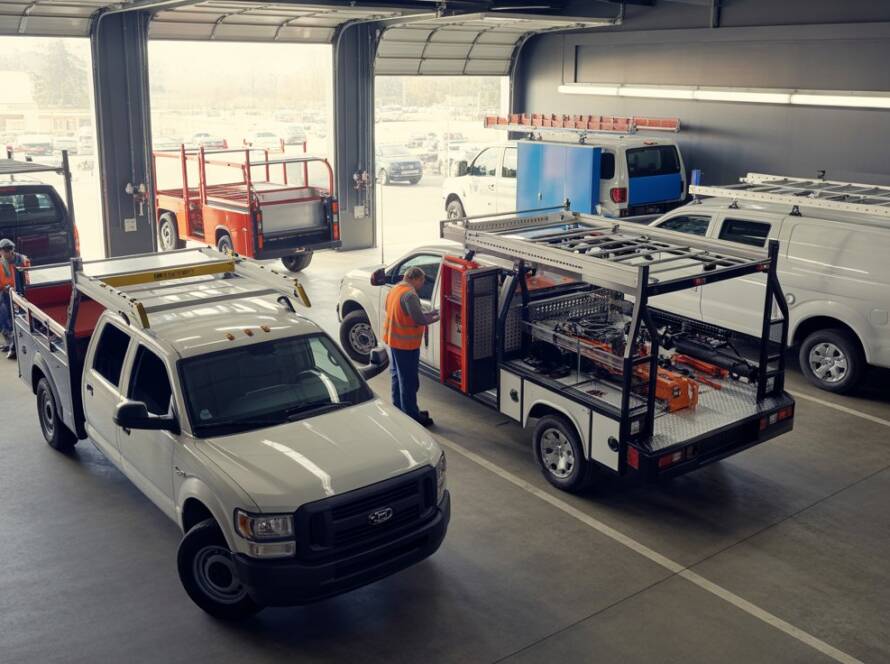
Planning graphics alongside racks, partitions, cameras, lighting, and safety equipment helps prevent rework and blocked graphics. Fleet managers can view completed vehicle upfitting projects and document approved vehicle graphics design standards for future replacements. OCM Upfitting serves Fort Lauderdale and South Florida while supporting broader fleet programs.
Frequently Asked Questions
What Information Should a Commercial Vehicle Wrap Include?
Include the company name or logo, primary service, and one clear contact method. Add other information only when it remains readable from a realistic distance.
Should Every Vehicle Use the Same Layout?
No. Adapt the layout to each body style while keeping colors, fonts, logo treatment, and messaging consistent.
How Should Work Truck Wraps Account for Equipment?
Measure racks, cranes, lights, compartments, handles, and other equipment before production. Keep critical graphics visible during normal operation.
Why Coordinate Wraps With Vehicle Upfitting?
Coordination reduces the risk of equipment covering graphics, avoids duplicate labor, limits vehicle downtime, and supports consistent specifications.
Make Every Vehicle Work Harder for Your Brand
The best commercial vehicle wrap design is simple, readable, consistent, and built around the actual vehicle. Correcting mistakes before printing prevents wasted materials, delays, weak branding, and replacement costs. For fleets in Fort Lauderdale, South Florida, or nationwide, planning protects the marketing investment and operating schedule.
Planning new graphics or correcting an inconsistent fleet? Request a fleet wrap consultation with OCM Upfitting or call +1 954-764-8117 to coordinate materials, production, installation, and upfitting.