Tool Theft Can Disrupt More Than One Service Call
For contractors and service businesses, a work van is often a mobile inventory room carrying tools, parts, diagnostic equipment, and job-specific gear. Weak cargo van security can turn one break-in into canceled work, equipment replacement, vehicle repairs, employee downtime, and rescheduling across an entire route.
The strongest approach is layered rather than relying on a single lock or alarm. OCM Upfitting currently serves commercial and service fleets alongside public-safety organizations and lists storage, vehicle technology, custom fabrication, partitions, cameras, and power-management and security applications among its broader upfitting capabilities.
A fleet security plan should start with what the van carries, how frequently technicians need access, where vehicles are parked, and which doors or windows create the greatest exposure.
Build Cargo Van Security in Layers
No single device can guarantee that tools will not be stolen. The objective is to make unauthorized entry and rapid tool removal more difficult while preserving the workflow employees need throughout the day.
A practical layered strategy can include:
- Reinforced door security
- Protected windows
- A cargo partition
- Lockable internal storage
- Alarms and monitoring
- Cameras
- Vehicle or asset tracking
- Better interior and exterior lighting
- Parking procedures
- Controlled key access
NHTSA’s current vehicle theft prevention guidance recommends basic measures such as locking doors and windows, hiding valuables, parking in well-lit areas when possible, and considering anti-theft or vehicle-recovery equipment. Those practices create a useful foundation, but commercial fleets carrying expensive equipment often need additional physical security inside the vehicle.
Strengthen the Cargo Doors First
Rear and sliding doors are natural starting points for van tool theft prevention because they provide direct access to the cargo area.
Reinforced Locks and Deadlocks
Appropriate work van security locks may add another mechanical barrier beyond the vehicle’s factory locking system. Depending on the van, this could involve reinforced locking hardware, deadlocks, protected latch areas, or other vehicle-specific solutions.
Fleet managers should not assume one lock fits every Transit, ProMaster, Sprinter, Express, or other cargo van configuration. Door construction, wiring, body dimensions, existing latch systems, and installation points differ by model and model year.
That vehicle-specific planning matters. Ford provides dedicated upfitter publications and body-builder resources for commercial vehicle modifications, while GM publishes body builder manuals containing electrical, body, frame, and alteration guidance.
Professional installation should strengthen the van without creating new problems with doors, wiring, corrosion protection, or other vehicle systems.
Window Screens and Visibility
Rear or side cargo windows may also require protection when valuable equipment is visible through the glass. Screens or protective barriers can add resistance against rapid access, but their placement should not unnecessarily compromise the driver’s required visibility.
Where a fleet regularly carries high-value tools, reducing outside visibility into the cargo area can be as important as adding hardware.
Create a Second Barrier Inside the Van
A thief getting through one door should not automatically have unrestricted access to every tool.
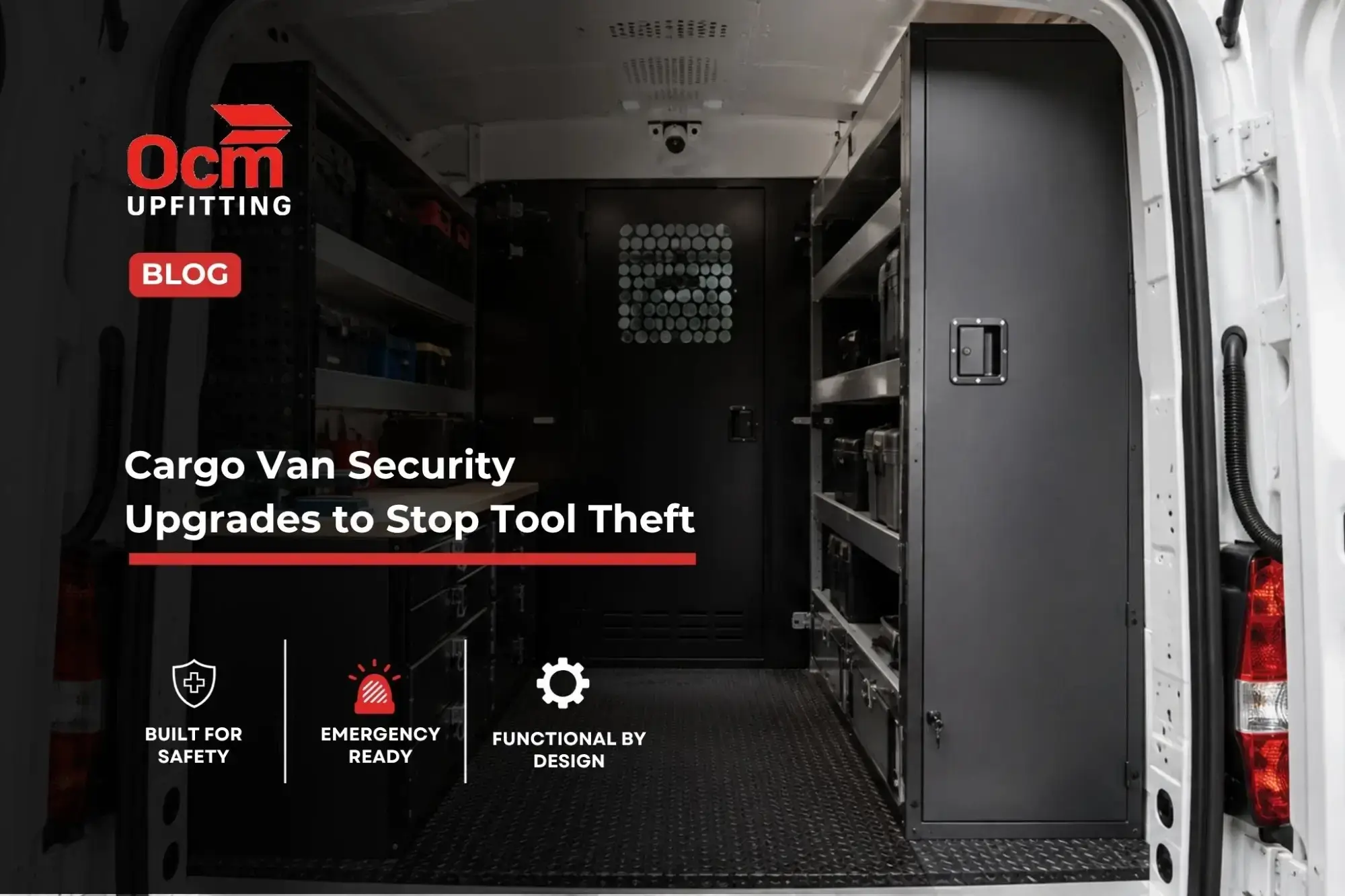
A partition can separate the driving area from the cargo compartment, while secure van storage can divide tools into smaller protected zones. OCM Upfitting’s current fleet van upfitting guide specifically identifies tool storage systems, secure storage compartments, bulkhead partitions, electrical upgrades, and safety equipment as commercial van upfit considerations.
Internal security options may include:
- Lockable drawers
- Enclosed cabinets
- Secured shelving
- Interior vaults
- Mounted tool boxes
- Partitions between cab and cargo areas
- Dedicated compartments for high-value equipment
OCM’s guide to storage and shelving in service vans also discusses locking drawers, tool mounting, shelving, partitions, and layouts built around the needs of different trades.
The objective is not simply to install the maximum number of locks. Technicians still need practical access throughout a workday.
Balance Security With Technician Workflow
Poorly planned secure van storage can create a different operational problem if employees must unlock several compartments every time they need a commonly used tool.
Fleet managers should divide equipment by access frequency and value.
Frequently used hand tools may need quick-access secured drawers near the side door. Expensive diagnostic tools, specialized equipment, or items needed only occasionally may be better placed in a more protected compartment.
Heavy equipment should also be positioned with weight distribution, accessibility, and secure mounting in mind.
Mercedes-Benz Vans’ current Body and Equipment Guidelines emphasize that modifications and equipment installation must follow vehicle-specific technical limitations. The manufacturer also places responsibility on the upfitter to ensure modifications do not compromise vehicle safety.
This is why a professional commercial van security system should be designed around the actual make, model, tools, technicians, and workflow rather than copied from another fleet.
Add Electronic Detection and Documentation
Physical barriers delay access. Electronic systems can add detection, documentation, or recovery capability.
Cargo Van Alarm System
A cargo van alarm system can add an audible security layer when unauthorized entry is detected. The exact sensors, triggers, notifications, and integration capabilities depend on the equipment selected.
Fleet managers should define what they actually need before choosing a system. Questions may include:
- Which cargo doors need monitoring?
- Should the system operate independently from factory locking?
- Who receives alerts?
- How will technicians arm and disarm it during frequent stops?
- Will added equipment create additional electrical demand?
- How will the system be serviced later?
A cargo van alarm system that is difficult for employees to use may be disabled or bypassed during normal operations, weakening the security plan.
Cameras and Tracking
Vehicle cameras can provide another layer of documentation and visibility. OCM Upfitting’s current service catalog specifically lists vehicle cameras, DVRs, intercoms, monitors, and power-management and security applications.
GPS or other recovery technology may also fit into a broader commercial van security system, but specific tracking functionality, alerts, subscriptions, and compatibility should be confirmed for the product and vehicle rather than assumed.
If your fleet is evaluating cameras, storage, partitions, lighting, or other security-focused equipment, OCM Upfitting can review how the vans are used and help plan an appropriate combination of verified upfit components through its vehicle upfitting services.
Do Not Ignore Parking and Key Control
Hardware alone cannot address every theft opportunity.
For van tool theft prevention, fleet policy should also define what happens after the last service call.
Consider:
- Where vans are parked overnight
- Whether lighting or site cameras cover fleet parking
- Whether high-value tools should remain inside overnight
- Who holds spare keys
- How lost keys or access devices are handled
- Whether technicians must confirm that cargo doors are locked
- How theft or attempted entry is reported
- How tool inventories and serial numbers are maintained
NHTSA recommends well-lit parking, locking doors and windows, removing keys, and keeping valuables out of view. Those basic practices remain relevant even when additional security equipment is installed.
Standardize Security Across Similar Vans
If five technicians driving the same vehicle class use five completely different security arrangements, training and inspection become more complicated.
OCM Upfitting’s fleet safety planning guidance recommends repeatable equipment packages where similar vehicles perform similar roles, while still allowing specialized units to receive mission-specific equipment.
A repeatable cargo van security specification might document:
- Lock locations
- Partition configuration
- Secure drawer locations
- Camera placement
- Alarm controls
- Key-management procedures
- Tool-storage zones
- Inspection points
Standardization can make it easier for technicians to move between similar vans and for fleet managers to inspect security hardware consistently.
HVAC Service Vans
Consider a hypothetical HVAC company operating 18 service vans.
The technicians carry common hand tools, meters, cordless equipment, replacement parts, and several higher-value diagnostic tools. Some vans return to a secured yard each night, while others remain with technicians.
Installing identical heavy locks everywhere without reviewing workflow could slow technicians making repeated stops.
A stronger plan might use vehicle-specific work van security locks on primary cargo doors, a partition between the cab and load area, quick-access locking drawers for daily tools, a more protected compartment for diagnostic equipment, and camera or alarm equipment where the operating environment justifies it.
The fleet could then establish consistent end-of-shift key and locking procedures.
The result is a layered plan designed around how the vans are actually used, not simply a collection of security accessories.
Plan Security Around the Vehicle and the Work
Effective cargo van security begins with understanding what is being protected, where theft exposure exists, and how technicians need to move through the vehicle.
OCM Upfitting works with commercial and service fleets on storage, vehicle technology, custom configurations, cameras, partitions, and other upfitting requirements. Its current website lists (954) 764-8117 as the primary contact number.
Call OCM Upfitting at (954) 764-8117 to discuss your van models, tools, cargo value, technician workflow, parking environment, and security priorities so the upfit can be planned around the way your fleet actually operates.
FAQs
What is the best way to improve cargo van security?
A layered approach is generally more practical than depending on one device. Fleet managers can evaluate door security, partitions, lockable storage, cameras, alarms, parking practices, and controlled access based on the vehicle and the equipment being carried.
Are factory locks enough for a commercial work van?
Factory locks provide the vehicle’s standard access control, but fleets carrying high-value equipment may decide that additional work van security locks, internal storage, or other barriers are appropriate. Any modifications should be compatible with the specific vehicle.
Should tools be removed from a work van every night?
That depends on the fleet’s operating model, parking location, equipment value, storage alternatives, and insurance requirements. When tools remain inside, fleets can reduce exposure through layered physical security, controlled parking, concealed or locked storage, and consistent locking procedures.
Can OCM Upfitting build a commercial van security system?
OCM Upfitting’s current site verifies commercial fleet upfitting, secure storage-related capabilities, partitions, vehicle cameras, custom fabrication, and power-management and security applications. Specific locks, alarms, tracking technology, and compatibility should be confirmed for the individual vehicle and project before the build is specified.