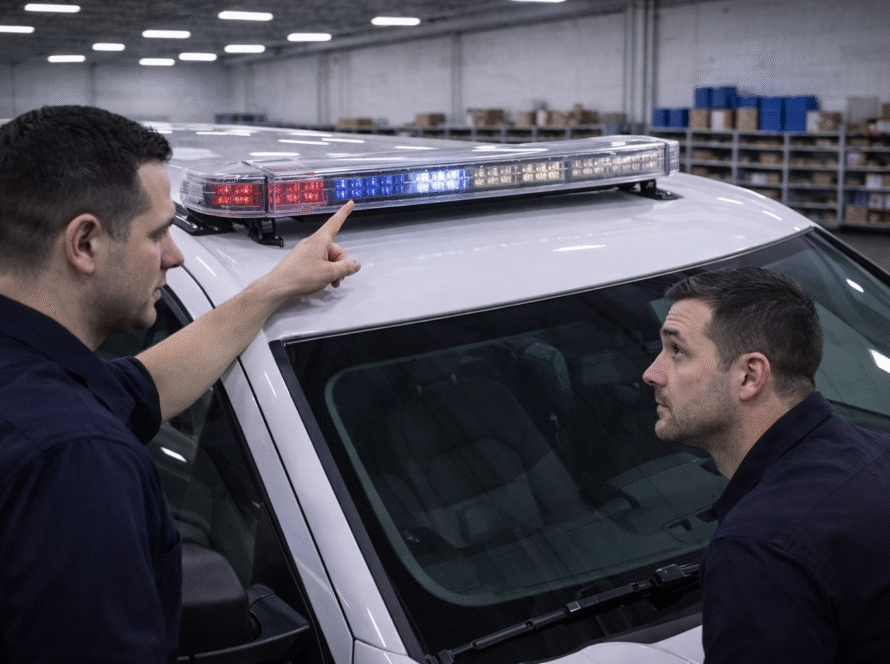
Full-length light bars and mini light bars are two of the most common emergency lighting options for fleets, law enforcement, and first responders. Choosing between them depends on your operational environment, vehicle type, and visibility requirements. Understanding the differences helps ensure that every vehicle in your fleet is properly equipped for performance, safety, and compliance.
When selecting lighting systems for first responder vehicle upfitting, the right configuration can make all the difference during high-risk operations. From roof-mounted full-length bars designed for maximum visibility to compact mini light bars suited for low-profile use, each setup offers unique benefits. Let’s break down how to choose the best lighting system for your fleet’s specific mission.
1. Full-Length Light Bars: Maximum Coverage and Visibility
Full-length light bars, often installed across the entire roofline of a vehicle, are built for high visibility in demanding environments. They typically feature multiple LED modules, customizable flash patterns, and advanced optics for 360° illumination.
Key Advantages of Full-Length Light Bars:
-
Unmatched visibility: The extended width provides broader coverage, crucial for highway patrol, fire, and EMS vehicles responding at high speeds.
-
Enhanced safety presence: A full-length bar clearly identifies emergency vehicles from long distances and multiple angles.
-
Integrated technology: Many modern bars include built-in traffic advisors, alley lights, takedowns, and even automatic dimming sensors.
-
Professional appearance: Full-length bars project authority, making them ideal for marked fleet vehicles that require a visible deterrent effect.
Best Use Cases:
Full-length light bars are the go-to choice for:
-
Police cruisers and highway patrol units
-
Fire trucks and rescue vehicles
-
Utility and tow trucks operating on busy roadways
-
Command or supervisor vehicles that must stand out during incident response
In these situations, the goal is maximum awareness. The larger light bar footprint enhances recognition and reduces the risk of roadside collisions.
2. Mini Light Bars: Compact Power for Stealth and Flexibility
Mini light bars are compact, rear- or roof-mounted units designed to deliver strong output in a smaller form factor. Despite their reduced size, they provide exceptional performance for fleets requiring versatile or temporary lighting setups.
Key Advantages of Mini Light Bars:
-
Compact design: Ideal for smaller vehicles, undercover units, or those requiring a discreet lighting profile.
-
Ease of installation: Mini light bars can be magnet-mounted, bolted, or temporarily installed on multiple vehicles.
-
Flexible placement: They fit vehicles with roof racks, light-duty trucks, or vans where full-length bars may not be practical.
-
Cost-effective solution: Mini bars offer powerful illumination without the higher cost of full-length systems.
Best Use Cases:
Mini light bars work well for:
-
Unmarked or undercover police vehicles
-
Municipal service fleets or road maintenance crews
-
Construction and escort vehicles needing occasional light use
-
Departments seeking portable or quick-deploy options
Because of their compact profile, mini light bars help maintain a low-visibility look while still offering strong lighting power when activated.
3. Comparing Performance: Full-Length vs. Mini Light Bars
| Feature | Full-Length Light Bars | Mini Light Bars |
|---|---|---|
| Visibility | Excellent, full roof coverage | Moderate to strong, limited coverage |
| Mounting | Permanent roof mount | Magnetic or bolted (temporary/permanent) |
| Vehicle Type | Larger vehicles, patrol units, fire/rescue | Smaller fleets, utility, unmarked |
| Cost | Higher | Lower |
| Appearance | Prominent, professional | Stealthy, low-profile |
| Technology Options | Integrated takedown, alley, and traffic advisor lights | Typically basic flash patterns, optional traffic features |
Both options serve important but distinct roles. The right choice depends on how visible your fleet must be and the type of work each vehicle performs.
4. Factors to Consider When Choosing Between the Two
When deciding which system suits your fleet, consider these key factors:
-
Operational environment: Urban areas with heavy traffic benefit from full-length bars for greater visibility, while rural or low-traffic zones may do fine with mini bars.
-
Vehicle purpose: Marked emergency vehicles require strong visual impact, while administrative or support units benefit from smaller, flexible options.
-
Budget and scalability: Mini light bars are more affordable and easier to scale across larger fleets with budget constraints.
-
Regulatory compliance: Ensure all lighting setups meet your state’s emergency vehicle lighting standards and color codes.
-
Installation method: Permanent mounts suit dedicated vehicles, while magnetic mounts allow shared use among multiple fleet units.
Balancing these factors ensures every upfit is efficient, compliant, and mission-ready.
5. Combining Light Bar Types for Fleet Versatility
Many agencies and commercial fleets find success combining both lighting styles. For example, command or supervisor vehicles might feature a full-length bar up top and a mini light bar at the rear for added directional warning. This layered approach maximizes visibility without sacrificing flexibility.
The best strategy often depends on your agency’s workflow. Partnering with experienced upfitters helps tailor lighting systems to your specific fleet and operational goals.
Conclusion
Both full-length light bars and mini light bars are valuable tools for improving fleet visibility and safety. The decision ultimately comes down to the nature of your operations, the vehicles in use, and the balance between visibility and discretion.
If you’re unsure which lighting system best suits your department or commercial fleet, OCM Upfitting’s specialists can guide you through the process from consultation and design to installation and testing.
? Ready to upgrade your fleet’s lighting system?
Book your appointment today with OCM Upfitting to get expert recommendations and professional installation for your emergency lighting and fleet upfit needs.