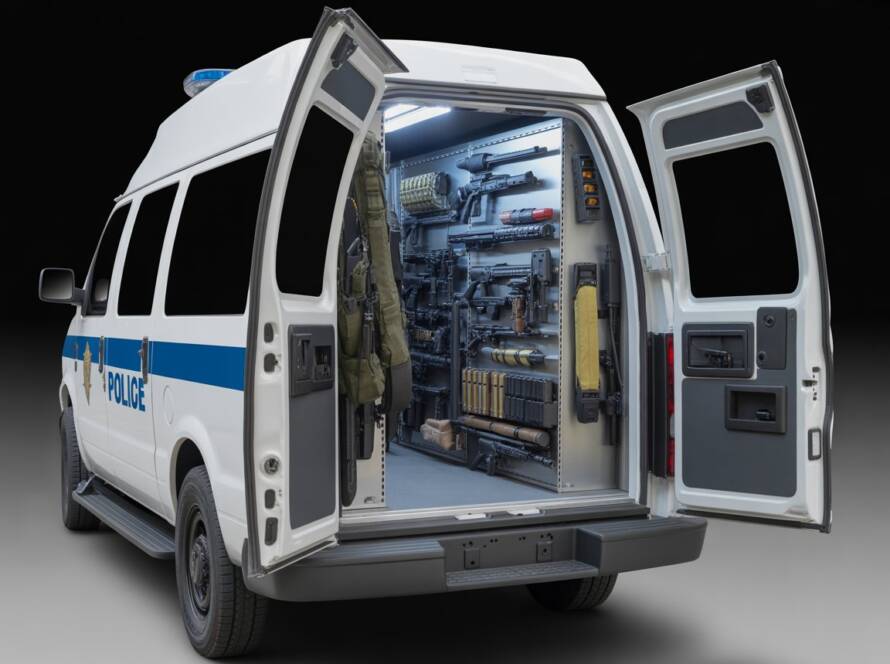
Emergency flash patterns are the foundation of how warning lights communicate on the roadway. The right pattern ensures drivers instantly recognize a response vehicle, react faster, and avoid confusion, especially in high-stress or congested road conditions.
Emergency lighting isn’t one-size-fits-all. The effectiveness of any lighting system comes down to two critical factors: beam angle (how light spreads) and flash pattern (how the light moves or pulses). When combined strategically, these elements create an unmistakable visual signal that commands attention and improves safety for emergency crews, transport units, and commercial fleets.
In fact, roof-mounted systems and lighting packages designed around emergency lighting products help agencies maintain both visibility and compliance while maximizing public awareness.
The Role of Beam Angle in Roadway Visibility
Beam angle controls the physical spread of light. If you imagine lights as a voice, beam angle decides whether it whispers to one lane or shouts across the entire highway.
For roadway command visibility, light bars and warning modules typically fall into three beam angle categories:
Narrow Beam (Focused, Long Throw)
-
Directs light farther down a specific lane or direction.
-
Ideal for highway patrol at high speed.
-
Helps drivers see the source of the signal from long distances.
-
Less effective at illuminating multiple lanes or wide intersections.
Wide Beam (Flood-Style Spread)
-
Illuminates more horizontal space.
-
Great for roadside scene lighting and multi-lane alerts.
-
Perfect for utility vehicles, tow fleets, and rescue scenes.
-
Light doesn’t travel as far forward but spreads farther side-to-side.
Hybrid Beam (Balanced Focus + Spread)
-
Combines moderate distance with strong horizontal coverage.
-
The most practical for departments running mixed routes (city + highway).
-
Reduces light dark spots while still maintaining forward visibility.
What works best? For responding fleets operating in both urban and highway environments, hybrid beams consistently outperform single-angle systems because they maintain distance and lateral visibility without sacrificing brightness.
Flash Pattern: The Language of Emergency Lighting
Flash patterns determine motion, timing, and rhythm. Unlike beam angle, flash patterns influence how drivers subconsciously interpret the light signal.
Here are the most common flash pattern types used in U.S. fleets:
Steady Single Flash
-
Simple but can feel outdated.
-
Effective for basic alerts but limited urgency messaging.
Double/Triple Flash
-
Higher perceived urgency.
-
Increases driver reaction time compared to single flash formats.
Alternating Left-Right
-
Creates motion that feels directional.
-
Frequently used on patrol vehicles and command fleets.
Scan or Sweep Motion
-
Produces an attention-grabbing “movement” effect.
-
One of the most visually commanding patterns for traffic lane awareness.
Randomized/Flicker Patterns
-
Designed for stealth or undercover units.
-
Intense but not ideal for public road command situations since the signal can feel inconsistent.
Directional Traffic Advisor Patterns
-
Sends clear left/right guidance at roadside scenes.
-
Excellent for construction, transport fleets, and incident control.
What works best for command visibility? Sweeping, alternating, or double/triple flash patterns are proven favorites because they:
-
Feel urgent
-
Carry motion
-
Avoid confusion
-
Maintain visual consistency
Where Beam Angle and Flash Pattern Overlap
Here’s the real takeaway fleet managers and decision-makers care about:
| Use Case | Best Beam Angle | Best Flash Pattern |
|---|---|---|
| High-speed highway patrol | Narrow or Hybrid | Alternating + Double/Triple flash |
| City intersections | Wide or Hybrid | Sweep/Scan motion + Alternating |
| Roadside incident control | Wide | Directional traffic advisor or sweep |
| Undercover / low profile | Narrow | Random or interior hideaway flashes |
| K9 & transport fleets | Hybrid | Alternating, triple flash, rear warning combinations |
For maximum roadway command visibility, the most effective systems combine:
-
Hybrid beam angles that provide balanced spread
-
Alternating + sweep motion flash patterns to add direction and urgency
-
Rear-facing traffic advisor modules for scene control
When these elements work together, visibility isn’t just improved — it’s dominant. It sends a clear “move with awareness” signal that reduces driver hesitation, prevents collisions, and gives response teams the safest operating environment possible.
Brightness Still Matters, But Only When It’s Useful
You could own the brightest light bar in the country, but if the beam angle doesn’t distribute properly or the flash patterns confuse the public, the output loses effectiveness.
The goal is not just brightness — it’s functional visibility that:
-
Reaches far enough to be recognized early
-
Spreads wide enough to alert surrounding drivers
-
Flashes rhythmically enough to indicate urgency
-
Guides traffic without misinterpretation
-
Performs reliably in rain, fog, and direct sunlight
-
Meets state and agency regulations
Roof-mounted full-length bars designed with smart optics achieve better field performance, require less electrical load, and provide greater reliability over heat cycles and vibration.
Final Recommendations for Fleet Decision Makers
When selecting a roof lighting system, look for:
-
Hybrid or multi-angle optics
-
Sweep or alternating flash pattern presets
-
Programmable controllers for pattern switching
-
IP-rated sealed housings
-
Low electrical draw
-
Rear-facing traffic advisor compatibility
-
Strong mounting brackets that minimize vibration
-
Multi-tone centered signaling (not random patterns)
A properly selected system doesn’t just increase visibility — it improves public compliance, driver awareness, and scene safety.
Lead-Generating Call to Action
If you’re searching for lighting systems engineered for real field use, OCM Upfitting is here to build and install solutions that perform when it matters most. We outfit police, fire, EMS, K9, prisoner transport, and tactical fleets with durable roof lighting, intersection warning modules, siren sync, and rear traffic advisor systems.
Don’t risk installing lighting that looks powerful but fails the job. Choose systems optimized for command visibility and day-in, day-out reliability. Ready to upfit your emergency or fleet vehicles? Call our lighting and conversion team directly at (954) 764-8117