Why Police Fleets Need a Lighting Plan Before Installation
Buying identical LED light bars does not guarantee identical patrol vehicle installations. Different roof designs, mounting brackets, electrical systems, and control configurations can create inconsistencies across a police fleet.
For police fleet managers and procurement officers, fleet vehicle upfitting should begin with a defined lighting specification. This helps agencies coordinate equipment purchasing, installation, testing, and long-term serviceability before multiple vehicles enter production.
OCM Upfitting provides full-length emergency light bar installation and broader law enforcement vehicle integration services. Planning the complete configuration early gives departments a clearer basis for purchasing and deployment decisions.
Why Police Fleets Should Standardize Light Bar Specifications
Inconsistent emergency lighting equipment can complicate daily operations and maintenance.
When patrol vehicles use different light bars, mounting systems, and controllers, departments may face:
- Different control layouts between vehicles
- Incompatible replacement components
- Inconsistent maintenance procedures
- Additional technician training requirements
- Unclear installation documentation
Standardized police vehicle lighting helps departments establish repeatable equipment specifications while allowing vehicle-specific mounting and electrical adjustments.
Agencies comparing equipment sizes can review OCM Upfitting’s full-length vs. mini light bar guide.
Standardization should focus on consistent functionality, approved operating modes, documentation, and maintenance requirements rather than assuming every vehicle needs identical mounting hardware.
Evaluate LED Light Bars for Different Patrol Vehicles
Choosing police fleet LED light bars requires more than comparing brightness and equipment dimensions.
Fleet managers should evaluate the actual vehicle platform before approving a purchase.
Vehicle Compatibility and Roof Mounting
Patrol SUVs, police sedans, and specialty response vehicles may have different roof dimensions and mounting provisions.
Before installation, verify:
- Vehicle make, model, and model year
- Roof configuration and approved mounting locations
- Bracket compatibility
- Clearance around antennas and other equipment
- Wiring access and maintenance requirements
- Vehicle-specific manufacturer restrictions
The GM Upfitter Body Builder Manuals provide vehicle-specific electrical and structural information demonstrating why equipment integration must be evaluated for the actual vehicle.
A mounting system that worked on a previous patrol vehicle should not automatically be reused on its replacement.
Emergency Light Colors and Warning Patterns
Light bar colors and flash patterns must match applicable laws, vehicle authorization, and agency requirements.
For example, Florida Statute 316.2397 establishes restrictions and exceptions for certain warning lights, including blue lighting.
Agencies operating in different states should verify their own legal requirements before approving equipment.
No single lighting configuration should be assumed legal or appropriate for every police fleet.
Plan Mounting, Electrical Systems, and Lighting Controls
A successful emergency light bar fleet installation requires coordination between lighting equipment and the vehicle’s existing systems.
Police vehicles may already contain radios, cameras, sirens, controllers, and other electronics.
Before installation, determine:
- Electrical load requirements
- Appropriate circuit protection
- Wiring routes and connection points
- Controller placement
- Ignition-related operating requirements
- Service access
- Equipment interaction during simultaneous operation
Fleet managers should use the relevant OEM guidance and equipment instructions.
The NTEA Vehicle Specification Resources emphasize structured vehicle specifications, stakeholder coordination, and lifecycle considerations.
For police fleets, this means confirming that the lighting package fits the vehicle’s operational role rather than treating the light bar as an isolated accessory.
Make Lighting Controls Consistent
Officers moving between similarly equipped patrol vehicles should encounter familiar controls where practical.
A consistent specification can define:
- Approved control locations
- Standard operating sequences
- Authorized warning modes
- Equipment labeling
- Testing procedures
- Maintenance documentation
Vehicle-specific differences should be documented and approved rather than introduced informally during installation.
Planning Multiple Police Vehicle Installations?
If your department is replacing several patrol units, review the light bar specification before purchasing equipment for the entire fleet.
OCM Upfitting can discuss vehicle models, proposed lighting equipment, mounting requirements, electrical integration, and standardization needs before the installation plan is finalized.
Consider Maintenance and Replacement Parts Before Purchasing
The initial purchase price is only one consideration in fleet warning light procurement.
Fleet managers should also evaluate how lighting equipment will be maintained throughout its service life.
Ask prospective suppliers:
- Can individual lighting modules be serviced?
- Are replacement components available?
- Does servicing require removal of the complete light bar?
- Are controllers and mounting components replaceable?
- What documentation is provided?
- How are replacement components identified?
These questions are especially important when planning patrol vehicle light bar replacement across multiple units.
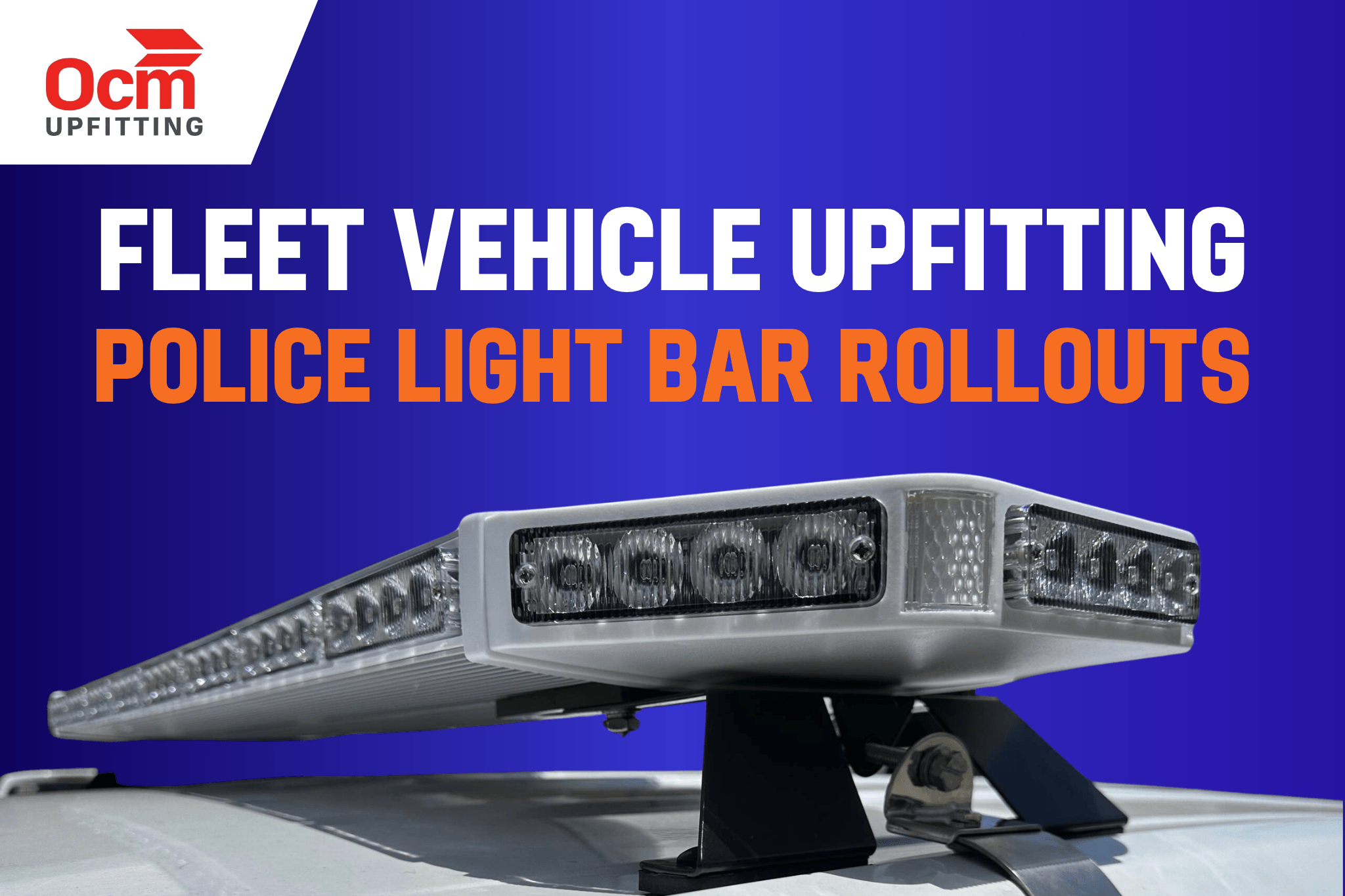
Street Elite LED Light Bars
OCM Upfitting currently lists Street Elite LED Light Bars among its available lighting products.
Published Street Elite 4800 product information describes a modular maintenance design that allows individual LED pods to be replaced without removing the complete bar.
This may make certain service procedures more convenient, depending on the installed configuration.
However, departments should confirm the exact product model, vehicle compatibility, replacement-part availability, service procedures, and support arrangements before purchasing.
A maintenance-friendly design does not eliminate the need for inspection or guarantee reduced downtime.
Approve the First Vehicle Before the Full Fleet Rollout
One of the most useful steps in fleet vehicle upfitting is approving a reference vehicle before repeating the installation.
The first completed patrol vehicle should be inspected against the approved specification.
Check:
- Light bar positioning and mounting
- Electrical integration and circuit protection
- Controller accessibility
- Approved warning functions
- Interaction with other installed equipment
- Installation documentation
- Maintenance access
- Final inspection and acceptance
OCM Upfitting’s vehicle upfit acceptance checklist provides additional guidance for confirming that completed vehicle equipment matches the approved build.
Resolve discrepancies before authorizing repeated installations where practical.
A 20-Vehicle Police Fleet
Consider a police department replacing twenty patrol SUVs in two purchasing groups.
The first ten vehicles arrive before the second group, which may have different model-year mounting or electrical provisions.
Rather than ordering all equipment based on assumptions, the department develops a standard lighting specification and validates the first completed vehicle.
That approved configuration becomes the reference for the remaining compatible units.
When the second group arrives, the department reviews the new vehicle platform and documents any necessary mounting or electrical differences.
This approach supports standardized police vehicle lighting without forcing incompatible installation methods across different vehicles.
It also helps coordinate equipment orders, acceptance testing, and future maintenance records.
What Should Police Fleet Managers Include in a Lighting Quote?
A clear request for quotation helps procurement teams compare proposals based on the same scope.
Include:
- Department and primary vehicle assignments
- Vehicle makes, models, and quantities
- New installations or existing lighting replacements
- Required light bar specifications
- Authorized warning colors and operating modes
- Controller and integration requirements
- Mounting and electrical considerations
- Equipment documentation requirements
- Replacement-part and maintenance expectations
- Planned vehicle arrival and deployment requirements
For agencies considering police fleet LED light bars, pricing can vary with equipment selection, vehicle configurations, installation complexity, electrical integration, fleet quantity, and procurement requirements.
Do not compare quotes solely by the light bar purchase price.
Police Fleet Light Bar Rollout Checklist
Before approving a multi-vehicle project, confirm:
- Vehicle types and quantities are finalized.
- Light bar specifications are approved.
- Mounting compatibility has been evaluated.
- Warning colors and operating requirements are verified.
- Electrical capacity and integration have been reviewed.
- Controller layouts are defined.
- Maintenance and replacement-part requirements are documented.
- The first vehicle will receive detailed acceptance testing.
- Vehicle-specific differences are recorded.
- Installation and deployment scheduling are coordinated.
- Final equipment records and wiring documentation are included.
This checklist helps procurement teams move from equipment selection to a repeatable installation plan.
Plan Your Police Fleet Lighting Project With OCM Upfitting
A consistent police fleet starts with a consistent specification, not simply matching equipment orders.
OCM Upfitting helps law enforcement agencies plan fleet vehicle upfitting around lighting requirements, mounting, electrical integration, vehicle compatibility, and operational needs.
Departments preparing new patrol vehicles or replacing existing lighting should have their vehicle models, fleet quantities, equipment requirements, and proposed installation schedule ready.
Call OCM Upfitting at (954) 764-8117 or use the fleet project inquiry page to request a police fleet lighting quote.
FAQs
How can police departments standardize LED light bars across their fleet?
Departments can establish approved equipment models, control layouts, operating modes, documentation requirements, and testing procedures. Vehicle-specific mounting and electrical differences should be reviewed separately.
Can the same LED light bar be installed on different patrol SUVs?
Possibly, but compatibility must be verified for each vehicle platform. Roof dimensions, mounting systems, electrical architecture, and other installed equipment may require different configurations.
What should agencies consider when replacing patrol vehicle light bars?
Review equipment condition, vehicle compatibility, electrical integration, mounting requirements, replacement-part availability, maintenance procedures, and the approved agency specification.
Can Street Elite LED light bars simplify maintenance?
Published product information for the Street Elite 4800 describes replaceable LED modules. Actual service requirements depend on the model, installation, available parts, and maintenance procedures. Departments should verify these details before purchasing.