Secure Prisoner Transport Starts With the Right Vehicle Setup
When transport vehicles are not properly designed for detainee handling, officer safety risks, liability concerns, and operational problems increase quickly.
For law enforcement agencies and municipal fleets, prisoner transport vehicles must withstand heavy daily use while supporting safe, controlled, and efficient transport procedures. Poorly designed partitions, outdated materials, and unreliable containment systems can create unnecessary risks for both officers and detainees.
At OCM Upfitting, law enforcement agencies trust professionally designed prisoner transport modules built for real-world fleet demands, long-term durability, and officer-focused functionality.
What Are Prisoner Transport Modules?
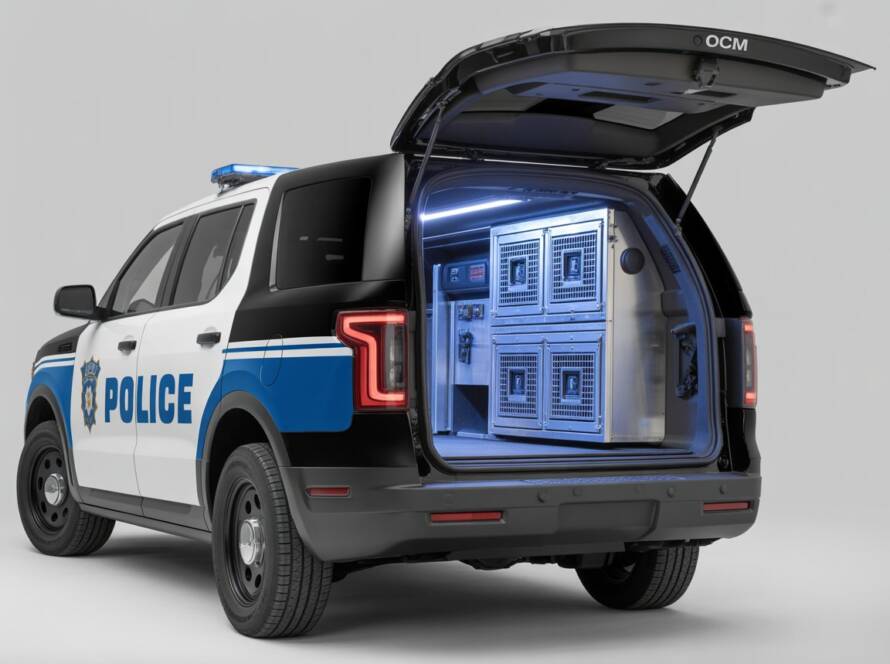
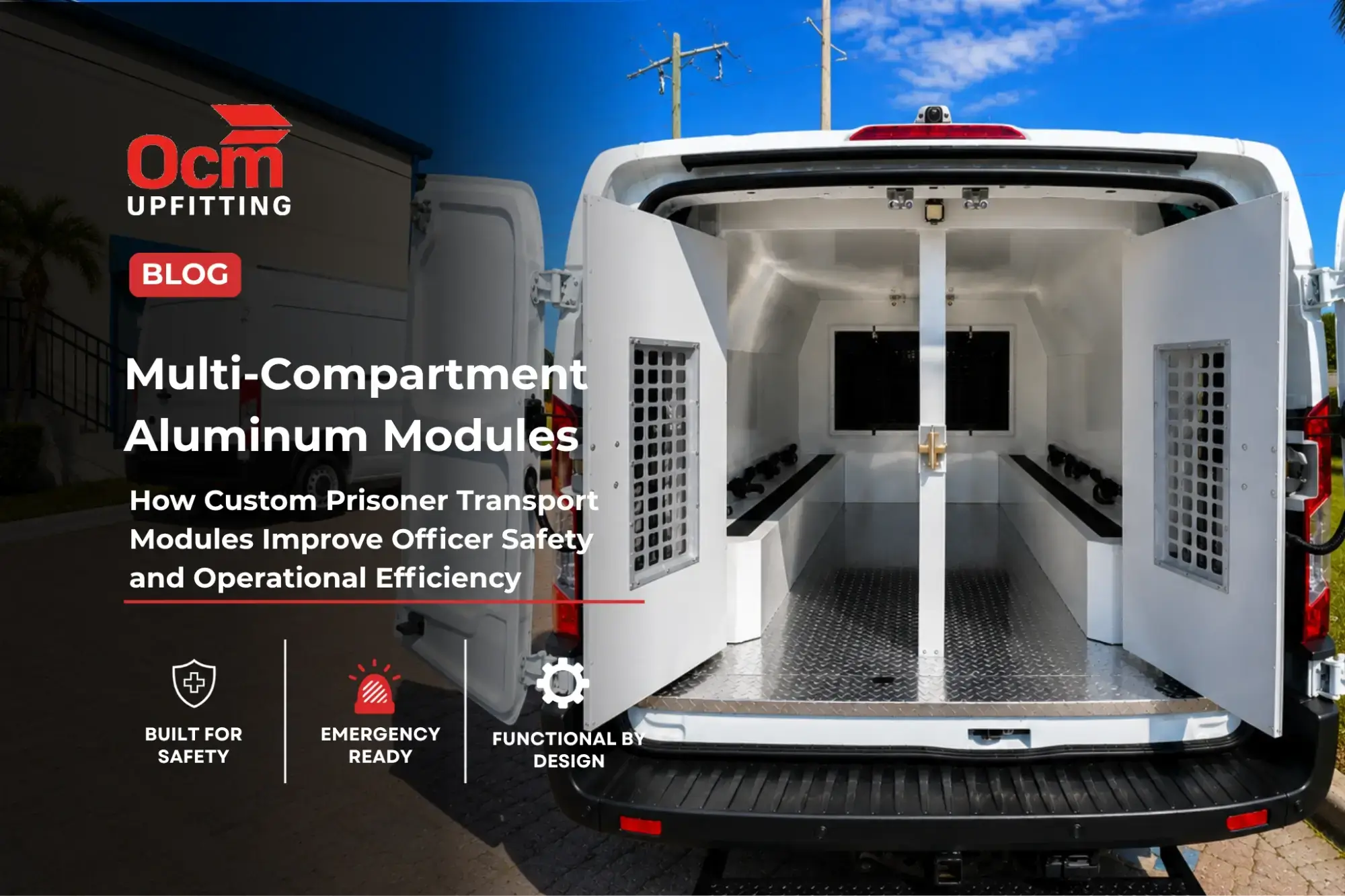
Prisoner transport modules are secure vehicle upfit systems designed to safely transport detainees inside SUVs, vans, patrol vehicles, and municipal fleet units.
These systems are built to improve:
- Officer safety
- Detainee containment
- Vehicle durability
- Cleaning and maintenance efficiency
- Fleet reliability
Unlike basic aftermarket partitions, professionally designed transport systems are built specifically for high-frequency law enforcement use.
Why Law Enforcement Agencies Invest in Custom Transport Modules
Officer Safety During Transport
Officer safety is one of the primary reasons agencies upgrade transport vehicles.
Secure transport modules help reduce:
- Physical contact risks
- Driver distractions
- Escape attempts
- Equipment interference
- Transport-related liability
Heavy-duty partitions create a secure separation between detainees and officers while helping drivers remain focused during transport operations.
According to the National Institute of Justice, proper transport design and containment systems play an important role in reducing operational risk during detainee transport procedures.
Better Containment & Situational Control
Modern transport systems improve control during loading, unloading, and transport operations.
Key features often include:
- Reinforced partitions
- Tamper-resistant hardware
- Secure locking systems
- Observation windows
- Electronic locking integration
- Surveillance camera compatibility
These features help officers maintain visibility and control while reducing unnecessary distractions during transport.
Reduced Liability & Easier Compliance
Improper transport setups can increase the risk of injuries, complaints, maintenance problems, and compliance concerns.
Professional prisoner transport systems help agencies:
- Improve detainee safety
- Support proper restraint procedures
- Reduce injury-related claims
- Maintain cleaner transport environments
- Improve operational consistency across fleets
For agencies operating high-volume transport vehicles daily, these improvements directly affect long-term fleet reliability and liability management.
Built for Heavy Daily Fleet Use
Transport vehicles experience constant wear from:
- Frequent loading and unloading
- Daily cleaning requirements
- Heavy-duty equipment use
- Long transport hours
- Repeated detainee movement
That is why professionally installed transport modules use durable, easy-to-clean materials designed for demanding law enforcement environments.
Features often include:
- Reinforced seating systems
- Anti-slip flooring
- Scratch-resistant surfaces
- Heavy-duty partitions
- Washable interior materials
These upgrades help reduce maintenance downtime while extending vehicle usability.
Improving Operational Efficiency for Law Enforcement Fleets
Faster Loading & Unloading Procedures
Well-designed transport layouts help officers move detainees more efficiently while reducing unnecessary movement inside the vehicle.
This improves:
- Officer workflow
- Transport consistency
- Loading efficiency
- Vehicle accessibility
For agencies transporting multiple detainees daily, even small workflow improvements can significantly reduce operational slowdowns.
Fleet Standardization Across Multiple Vehicles
Many departments operate mixed fleets that include:
- SUVs
- Vans
- Patrol vehicles
- Specialty transport units
Custom transport modules allow agencies to standardize layouts, equipment placement, and safety systems across multiple vehicle types.
Businesses and agencies managing larger fleets can also explore OCM Upfitting Fleet Services.
Reduced Maintenance & Vehicle Downtime
Outdated transport systems often create ongoing maintenance issues.
Loose partitions, damaged hardware, and difficult-to-clean interiors increase downtime and repair costs over time.
Modern transport modules help reduce:
- Frequent repairs
- Interior wear
- Cleaning time
- Replacement costs
- Operational downtime
For municipal and law enforcement fleets, durability directly impacts long-term operating costs.
Real-World Fleet Example
A municipal agency operating several prisoner transport SUVs experienced ongoing issues with aging partition systems, difficult interior cleaning, and repeated hardware failures.
After upgrading to professionally designed transport modules, the department improved:
- Vehicle reliability
- Officer usability
- Cleaning efficiency
- Detainee containment
- Fleet maintenance consistency
The result was a safer and more dependable transport process with reduced downtime across the fleet.
Modern Features That Improve Transport Operations
Today’s transport systems can include advanced features designed for both safety and operational usability.
Common Upgrades Include:
- Tamper-resistant hardware
- Electronic locking systems
- Integrated surveillance compatibility
- Anti-slip flooring
- Ventilation systems
- Reinforced partitions
- Secure storage compartments
- Interior lighting upgrades
Proper ventilation and climate control are especially important for detainee safety during long transport periods and high-temperature conditions.
Agencies can also review transport safety guidance from the National Highway Traffic Safety Administration and the International Association of Chiefs of Police.
Why Agencies Choose OCM Upfitting
Law enforcement agencies and municipal fleets choose OCM Upfitting because of their:
- Experience with government and law enforcement fleets
- Durable commercial-grade installations
- Fleet-specific customization
- Officer-focused transport layouts
- High-quality materials
- Long-term reliability
- Professional installation standards
Instead of generic transport setups, OCM Upfitting builds systems around real-world officer workflow, safety requirements, and long-term fleet use.
You can also explore additional commercial vehicle upfitting solutions available through OCM Upfitting.
Upgrade Your Fleet With Safer Prisoner Transport Solutions
Outdated transport systems increase safety risks, maintenance problems, and operational inefficiencies for law enforcement fleets.
OCM Upfitting provides professionally designed prisoner transport modules built for:
- Officer safety
- Secure detainee transport
- Long-term durability
- Easier maintenance
- Reliable daily fleet performance
If your current transport vehicles are difficult to maintain, outdated, or slowing down operations, now is the time to upgrade your fleet.
Call +1 954-764-8117 today to discuss custom prisoner transport solutions built for your agency’s operational needs.
You can also visit the OCM Upfitting contact page to request consultation support.
Frequently Asked Questions
What are prisoner transport modules?
Prisoner transport modules are customized vehicle systems designed to safely transport detainees while protecting officers and improving fleet functionality.
Can prisoner transport modules be installed in SUVs and vans?
Yes. Professional upfitting companies like OCM Upfitting can customize transport systems for SUVs, vans, patrol vehicles, and specialized fleet units.
Why are professional transport modules important?
Professionally designed systems improve officer safety, detainee containment, durability, maintenance efficiency, and long-term operational reliability.
Do transport modules help reduce maintenance issues?
Yes. Durable materials and professional installation help reduce wear, cleaning difficulty, repair frequency, and vehicle downtime over time.