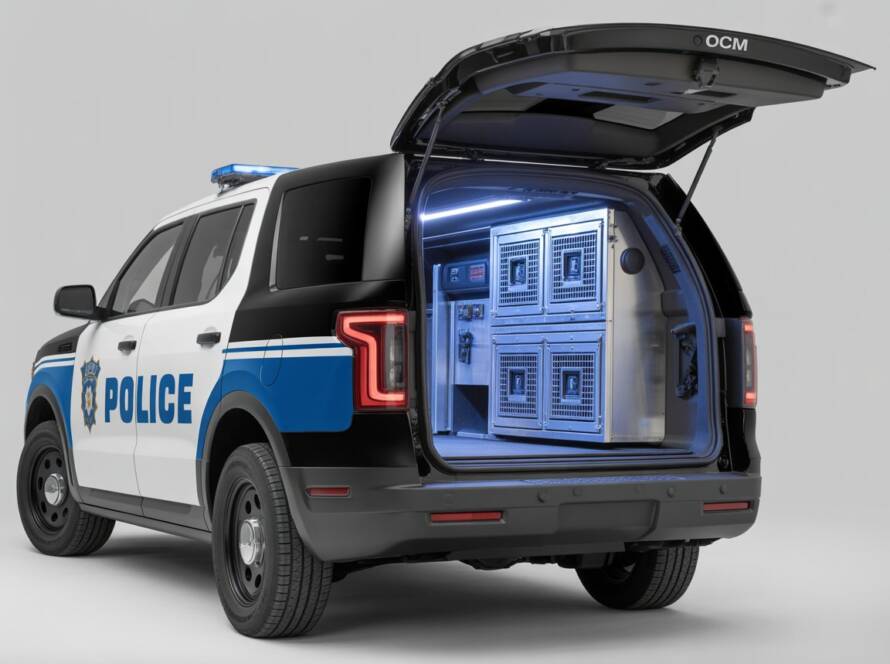
Antennas for tactical fleets play a critical role in maintaining clear, reliable communication during high-risk and time-sensitive operations. Law enforcement, fire rescue, EMS, and tactical units rely on dependable radio performance to coordinate responses, maintain situational awareness, and ensure officer safety. Choosing the right antenna setup is not just about equipment—it’s about performance in real-world conditions.
When agencies invest in professional fleet antenna solutions, they gain more than hardware. Proper antenna selection, mounting, and cable routing ensure consistent signal strength, reduced interference, and long-term durability across the entire fleet. Understanding how these components work together helps departments avoid communication failures when they matter most.
Understanding Antenna Gain and Why It Matters
Antenna gain determines how radio signals are transmitted and received. In simple terms, gain affects how far and how clearly a signal travels. Tactical fleets typically operate in varied environments—urban areas with tall buildings, rural highways, wooded terrain, or industrial zones. Each environment places different demands on antenna performance.
High-gain antennas focus radio energy outward, allowing communication over longer distances. These are ideal for highway patrol, rural response units, or inter-agency coordination. Lower-gain antennas provide a wider coverage pattern, making them better suited for city environments where signals need to bounce around obstacles.
Selecting the correct gain ensures that officers maintain clear communication without dead zones or dropped transmissions. Too much gain in the wrong setting can actually reduce effectiveness, making proper planning essential.
Choosing the Right Antenna Mounting Location
Mounting location has a direct impact on antenna performance. The roof of the vehicle is generally the preferred location because it provides a clear ground plane, allowing the antenna to transmit and receive signals evenly in all directions. Center-roof mounting delivers the most balanced performance and is widely used in tactical and patrol vehicles.
Other mounting options include trunk mounts, hood mounts, and bumper mounts. While these can work in certain situations, they may introduce signal obstruction or directional bias. For example, a bumper-mounted antenna may perform well in one direction but lose strength in others.
Professional upfitting ensures antennas are mounted securely without compromising vehicle structure, safety systems, or aesthetics. Proper sealing and reinforcement also protect against leaks, corrosion, and vibration damage.
Cable Routing: The Hidden Key to Reliable Communication
Even the best antenna can fail if cable routing is poorly executed. Coaxial cables carry radio signals between the antenna and communication equipment, and how they are routed directly affects signal quality.
Cables should be kept as short as possible to minimize signal loss. They must also be routed away from power lines, siren wiring, and vehicle electronics to prevent interference. Sharp bends, pinched cables, and exposed routing can degrade performance over time.
In tactical vehicles, clean cable routing is especially important to maintain interior safety and equipment accessibility. Professional installation keeps cables hidden, protected, and properly grounded, ensuring long-term reliability.
Reducing Interference in Multi-Device Vehicles
Tactical fleet vehicles often carry multiple electronic systems—radios, mobile data terminals, cameras, lighting controls, and sirens. Without proper planning, these systems can interfere with antenna performance.
Using quality coaxial cables, proper grounding techniques, and isolation methods helps reduce radio frequency interference. In some cases, multiple antennas are required to separate communication bands and prevent signal overlap.
Experienced upfitting teams evaluate the entire vehicle layout to ensure antennas and electronics work together rather than against each other.
Durability for Tactical and Emergency Use
Antennas in tactical fleets must withstand harsh conditions. High-speed driving, extreme temperatures, heavy rain, and physical impacts are all part of daily operations. Low-quality antennas may fail under these conditions, leading to communication gaps.
Commercial-grade antennas are built with reinforced housings, weather-resistant materials, and flexible whips that absorb impact without breaking. Secure mounting hardware prevents loosening over time, even under constant vibration.
Investing in durable antenna systems reduces maintenance costs and ensures dependable performance throughout the vehicle’s service life.
Compliance and Professional Standards
Public safety and tactical vehicles must meet communication standards set by federal, state, and local agencies. Antennas must operate within approved frequency ranges and power limits to avoid interference with other systems.
Professional upfitting ensures that antenna installations comply with all applicable regulations and manufacturer specifications. This protects agencies from liability issues and ensures smooth coordination with dispatch centers and neighboring departments.
Why Professional Antenna Installation Matters
While antennas may appear simple, proper installation requires technical expertise. Incorrect mounting, grounding, or cable routing can severely reduce performance—even with high-quality equipment.
Working with a professional upfitting provider ensures every detail is handled correctly, from antenna selection to final testing. This level of precision is essential for tactical fleets where communication reliability is non-negotiable.
Conclusion
Antennas for tactical fleets are a vital component of emergency vehicle communication systems. The right combination of antenna gain, secure mounting, and clean cable routing ensures clear, uninterrupted communication in every environment. When lives and missions depend on reliable signals, cutting corners is not an option.
If your agency or organization is looking to upgrade or install professional antenna systems, OCM Upfitting delivers dependable solutions built for real-world demands. Our team specializes in tactical and emergency fleet communication systems designed for performance and longevity.
? Ready to improve your fleet’s communication reliability?
Book your appointment today to speak with our experts, or call (954) 764-8117 to discuss your antenna and vehicle upfitting needs.