Maintenance for upfitted vehicles is not just about oil changes and tire rotations it’s about ensuring every specialized system, light, and modification performs reliably under pressure. Whether you manage emergency response units, utility fleets, or law enforcement vehicles, a well-maintained upfit ensures operational efficiency, safety, and compliance.
Upfitted vehicles are complex, blending mechanical and electrical systems with specialized gear. Neglecting routine inspections can lead to costly downtime and unsafe conditions. Partnering with a trusted fleet upfitting company can make all the difference in extending your vehicle’s lifespan and maintaining mission readiness.
1. Start with a Structured Maintenance Schedule
Creating a maintenance plan tailored to your fleet is the first step in keeping upfitted vehicles in top condition. Traditional service intervals don’t always apply especially when your vehicles include custom wiring, emergency lighting, and onboard power systems.
Key considerations for your maintenance calendar:
-
Schedule monthly or quarterly inspections for all upfit components.
-
Integrate upfit checks into your fleet’s preventive maintenance program.
-
Use digital maintenance logs to track component lifespan and service history.
This proactive approach minimizes downtime and helps identify wear or faults before they become costly failures.
2. Inspect Electrical and Lighting Systems Regularly
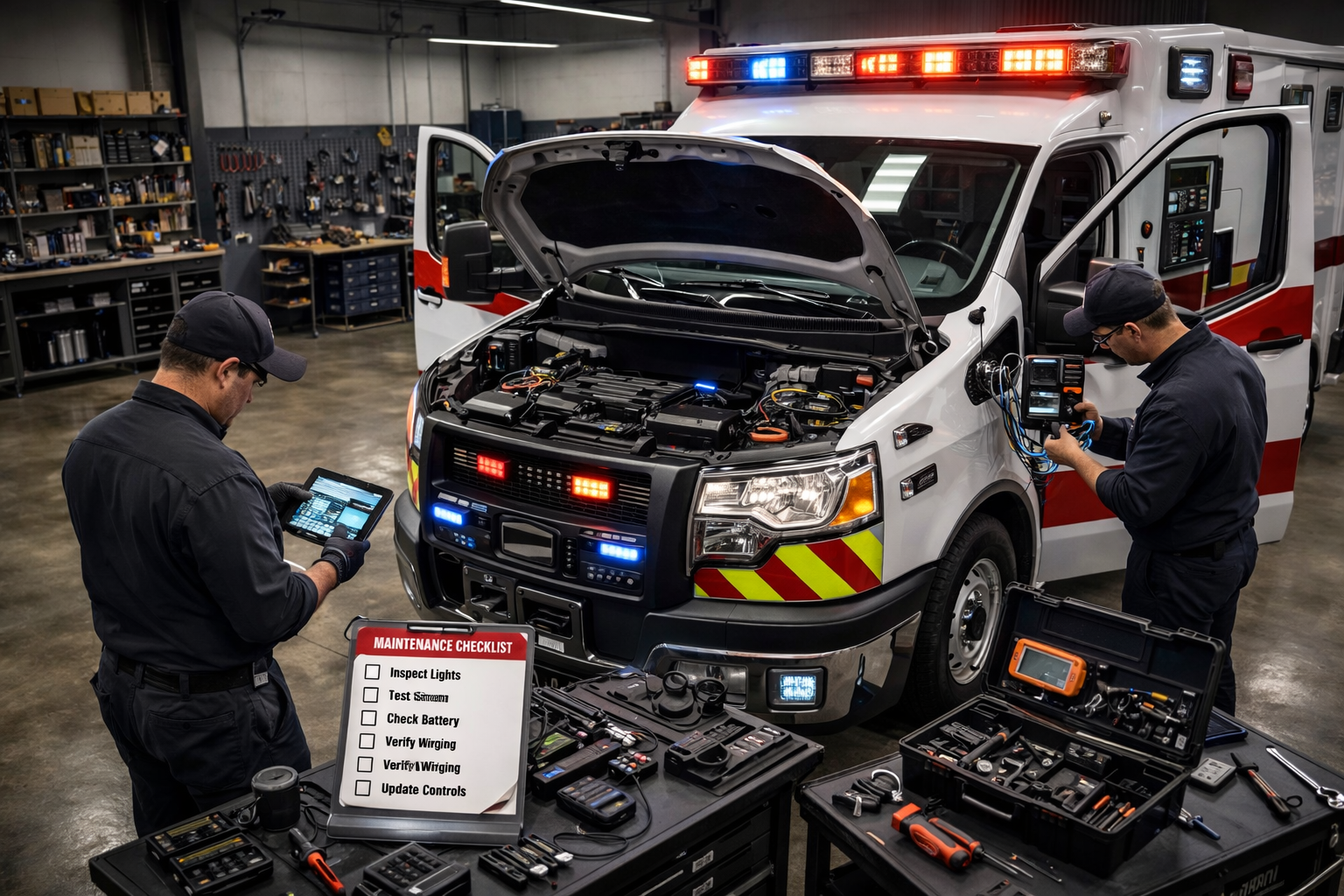
Electrical issues are among the most common problems in upfitted vehicles. Emergency lights, sirens, communication systems, and auxiliary power sources all rely on a stable electrical setup.
Inspection checklist:
-
Test all lightbars, strobes, and sirens for full functionality.
-
Check for loose connections or frayed wires.
-
Inspect fuses and relays in custom control panels.
-
Verify that battery voltage supports all auxiliary systems.
Routine checks help prevent electrical failures that could compromise mission-critical performance.
3. Maintain Auxiliary Power and Charging Systems
Many upfitted vehicles rely on secondary power systems such as inverters, generators, or additional batteries. These systems need routine care to perform efficiently.
Best practices:
-
Clean and tighten all terminal connections.
-
Monitor voltage output under load.
-
Replace worn or corroded cables immediately.
-
Follow manufacturer recommendations for charging cycles.
Failure to maintain power systems can lead to malfunctioning radios, dead batteries, or equipment shutdowns in the field.
4. Lubricate and Inspect Mechanical Add-ons
Upfitted vehicles often feature mechanical components such as winches, ladder racks, drawer slides, partitions, and mounts. These moving parts are prone to friction and corrosion over time.
Maintenance tips:
-
Apply proper lubrication to hinges, slides, and mechanical joints.
-
Inspect mounting brackets for cracks, looseness, or rust.
-
Verify that safety locks and latches engage properly.
Routine lubrication not only prevents wear but also improves operational efficiency and safety.
5. Keep Communication & Data Systems Updated
Modern fleet vehicles often integrate advanced communication systems, GPS, or mobile data terminals. These systems must remain secure and updated to function effectively.
-
Update firmware and software regularly.
-
Check antenna mounts and wiring for damage.
-
Back up configuration settings.
-
Test connectivity in real-world conditions.
A small oversight in data systems can lead to major communication breakdowns, especially for public safety and service vehicles.
6. Prioritize Safety Equipment Checks
Every upfitted vehicle should undergo regular inspection of safety features, including seat restraints, emergency gear, and fire suppression systems. For emergency response or utility fleets, compliance with OSHA and NFPA standards is non-negotiable.
Checklist includes:
-
Verify first aid kits, fire extinguishers, and warning devices.
-
Inspect cage mounts, gun racks, and partitions for stability.
-
Test all warning lights and sirens per state regulations.
These checks ensure not only compliance but also the safety of your personnel and the public.
7. Train Operators on Proper Equipment Use
The most well-maintained vehicle can fail if operators misuse specialized components. Operator training is a crucial yet often overlooked aspect of upfitted vehicle maintenance.
-
Educate drivers on safe operation of electrical and mechanical systems.
-
Provide easy-to-follow equipment manuals in each vehicle.
-
Conduct refresher sessions to reinforce best practices.
Proper usage reduces equipment strain, lowers repair costs, and promotes accountability across your fleet.
8. Conduct Periodic Professional Inspections
Even the most diligent in-house teams can miss hidden issues. Schedule professional inspections from an experienced upfitting partner at least twice a year. They’ll identify early signs of wear and provide expert recommendations for repairs or upgrades.
Professional inspections ensure:
-
Compliance with local and federal vehicle standards.
-
Proper functioning of all upfit components.
-
Documentation for audits, warranty claims, or insurance purposes.
9. Document Everything
Record-keeping is key to effective fleet maintenance. Document every inspection, service, and repair. This not only streamlines warranty claims but also builds data insights that guide smarter fleet management decisions.
Use fleet management software to:
-
Track part replacements.
-
Log technician notes.
-
Set automated reminders for upcoming services.
A documented trail ensures accountability and transparency across your fleet operations.
Keep Your Fleet Mission Ready Book Your Upfit Service Today
Your vehicles are only as reliable as the maintenance behind them. If you’re ready to ensure your fleet performs at peak efficiency, trust OCM Upfitting, the leading experts in vehicle customization and maintenance solutions. Don’t wait for downtime — book your appointment today or call (954) 764-8117 to schedule a professional inspection and keep your fleet mission ready.