When it comes to patrol vehicle fleet upfitting, precision, safety, and functionality are top priorities. Every department across the United States faces the same challenge balancing performance, technology, and cost while ensuring officers can do their jobs efficiently. This case study explores how one mid-sized police department successfully overhauled its patrol fleet through strategic planning, modern upfitting, and the support of a trusted fleet upfitting company.
The Challenge: Outdated Equipment and Inefficient Layouts
Before the overhaul, the department was struggling with aging vehicles and outdated equipment setups. Officers reported issues such as cluttered cabin layouts, unreliable power systems, and limited storage solutions for tactical gear. These challenges not only slowed response times but also posed safety concerns during critical missions.
Moreover, the department’s older vehicles lacked modern integrated systems such as in car computers, advanced lighting packages, and improved communication tools making it difficult for officers to coordinate effectively in the field.
The leadership recognized that to improve efficiency and officer safety, a complete fleet upfitting solution was necessary. They needed a partner capable of designing and implementing a scalable system to modernize every vehicle in their fleet.
The Strategy: Partnering with an Experienced Upfitting Team
The department partnered with a professional upfitting team that specializes in emergency and law enforcement vehicles. The goal was to create a unified fleet that supported officer workflows, enhanced visibility, and maintained compliance with national standards such as SAE and NFPA.
Key Objectives Included:
-
Safety First: Install advanced lighting systems, sirens, and warning devices for better road visibility.
-
Ergonomic Design: Optimize interior layouts for accessibility and comfort during long shifts.
-
Technology Integration: Seamlessly incorporate in-car computers, radios, and video systems.
-
Storage Solutions: Introduce modular, secure storage for weapons, equipment, and documentation.
-
Power Management: Upgrade to reliable auxiliary power systems for uninterrupted operations.
The Implementation Process
The upfitting process was divided into three key stages to ensure consistency and quality across the fleet.
1. Vehicle Assessment and Planning
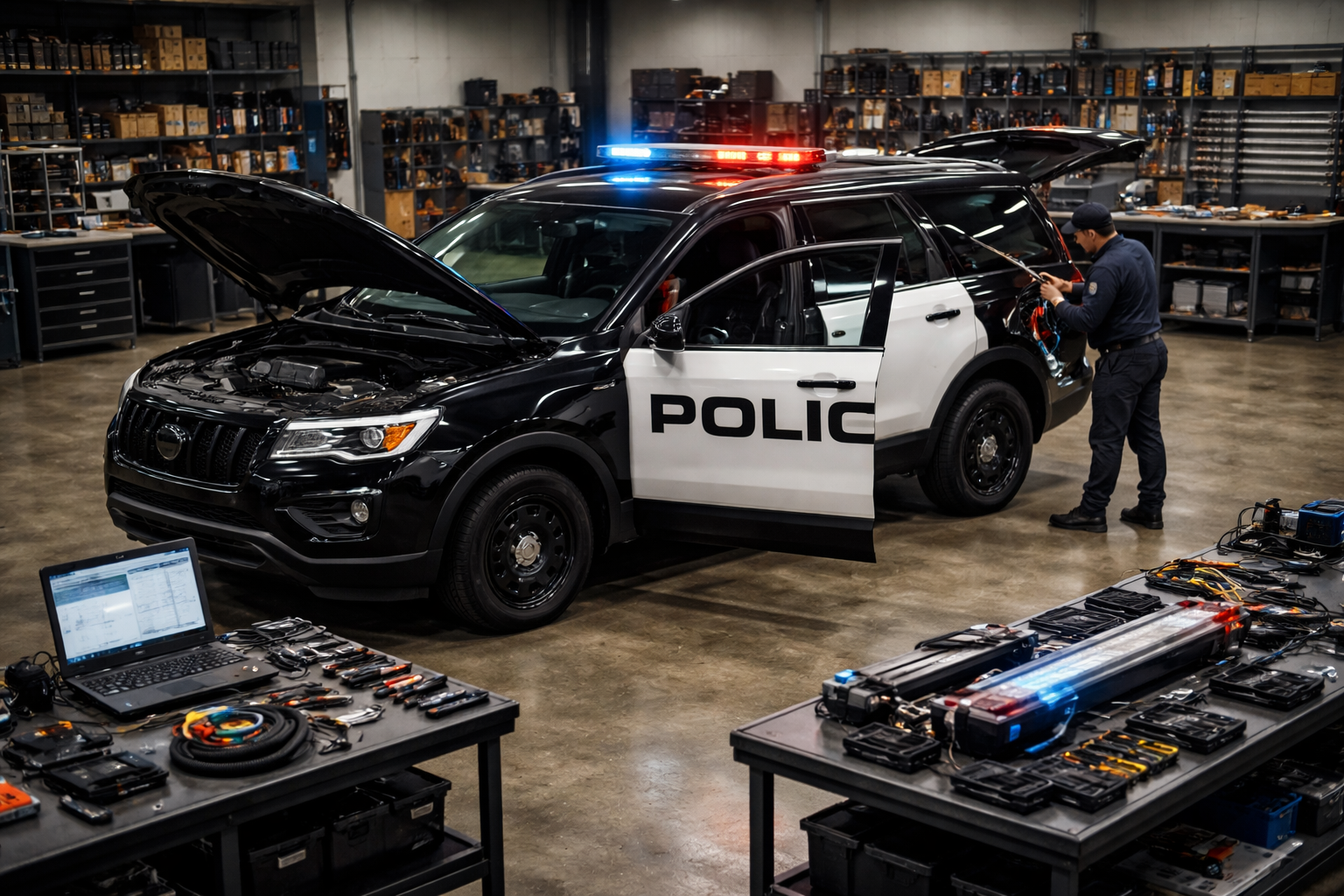
Technicians performed detailed inspections of existing vehicles, identifying weak points in layout and electrical systems. The team worked closely with department supervisors to design a customized upfit plan, aligning each feature with operational needs.
2. Custom Fabrication and Installation
Each vehicle was outfitted with:
-
Low-profile LED light bars and perimeter lighting for enhanced officer safety during traffic stops and pursuits.
-
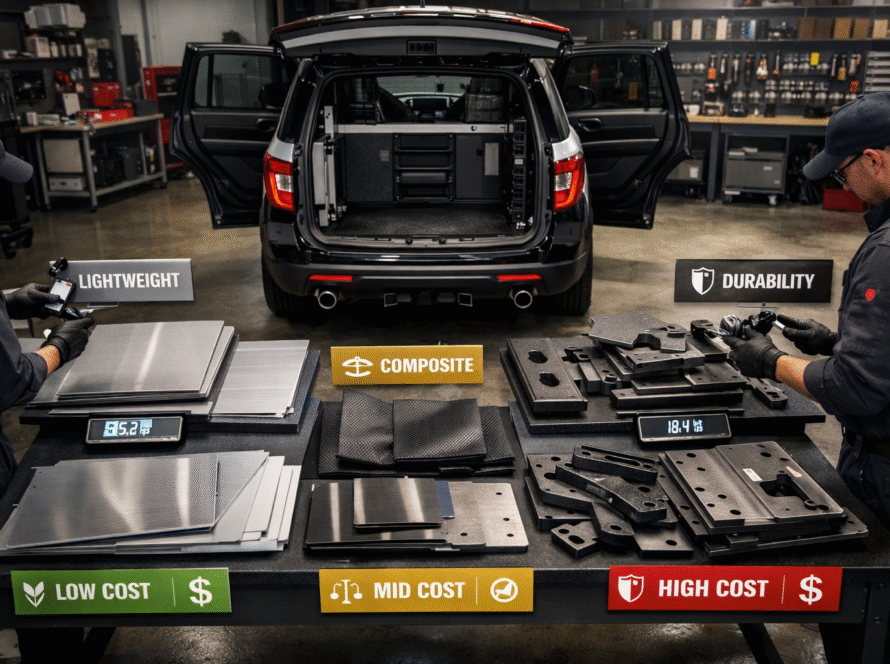
Heavy-duty partitions and bulkheads to protect officers and secure detainees safely.
-
Rugged in-car computer mounts designed to reduce vibration and maximize accessibility.
-
Custom console configurations providing easy access to radios, sirens, and control systems.
-
Climate-controlled K9 units for specialized service vehicles.
All electrical wiring was labeled and loomed to simplify maintenance and reduce downtime. Each installation was tested to ensure functionality, compliance, and durability.
3. Quality Assurance and Officer Training
Before deployment, every vehicle underwent a rigorous quality inspection. Officers received on-site training sessions to familiarize themselves with new layouts and technology features—ensuring seamless adoption from day one.
The Results: Improved Safety, Efficiency, and Officer Satisfaction
Within months, the department reported measurable improvements in both performance and morale. Officers noted the ease of accessing controls, better visibility at night, and improved comfort during patrol hours.
Key Outcomes:
-
30% faster response times due to streamlined in-car systems.
-
Reduced maintenance downtime thanks to standardized wiring and durable components.
-
Higher officer satisfaction, as reported in post-deployment feedback surveys.
-
Enhanced public perception due to professional, consistent vehicle appearance across the fleet.
This transformation demonstrated how strategic patrol vehicle upfitting can directly improve operational readiness and community safety.
Why a Strategic Upfitting Approach Matters
A well-planned vehicle upfit isn’t just about adding lights or storage—it’s about building an ecosystem that supports law enforcement professionals in real-world conditions. Proper design, equipment integration, and quality workmanship lead to safer, more reliable vehicles that last longer and cost less to maintain.
Fleet managers who overlook this process often face expensive retrofits, electrical failures, and officer frustration. Partnering with an experienced upfitting company ensures that every detail—from wiring harnesses to console layouts—is built for performance, reliability, and compliance.
Conclusion
This department’s success story illustrates the impact of working with a trusted upfitting partner committed to quality, safety, and innovation. By taking a proactive approach to fleet modernization, they not only enhanced officer effectiveness but also extended the lifespan and dependability of their patrol vehicles.
Ready to Upgrade Your Fleet?
If your department or organization is planning a vehicle modernization project, our expert team at OCM Upfitting is ready to help. We specialize in emergency, utility, and law enforcement fleet customization across the U.S.
? Book your appointment today or call (954) 764-8117 to discuss how we can design a reliable, high-performance solution for your fleet. Let’s build vehicles that work as hard as your team does.