A Successful Upfit Should Not Leave Warranty Responsibility Unclear
A vehicle can leave the upfit shop operating perfectly and still become a warranty headache months later if nobody documented who is responsible when something fails.
That is the risk fleet managers should address before drilling, wiring, mounting, cutting, programming, or adding equipment begins. A vehicle upfitting warranty is rarely one simple warranty. The completed vehicle may have OEM coverage, separate equipment-manufacturer warranties, an upfitter workmanship warranty, and different responsibility when an installed system contributes to a failure.
For fleet managers, procurement teams, municipalities, public-safety organizations, utilities, and service fleets, the objective is not simply to ask, “Is there a warranty?” It is to understand what each party covers, what can affect that coverage, and how a claim will be handled. OCM Upfitting works with public-safety, security, emergency-response, and service fleets on vehicle configurations involving equipment integration, lighting, conversions, graphics, fabrication, and other upfit requirements.
This article provides general fleet-planning information, not individualized legal advice.
Understand the Four Warranty Layers Before Approving the Build
A practical fleet upfit warranty review should separate four different questions.
1. OEM Vehicle Warranty
The OEM warranty applies to the original vehicle according to the manufacturer’s written terms.
Fleet managers should review how the planned modification could interact with:
- Factory wiring and connectors
- Electrical architecture
- Body or frame components
- Drilling or cutting
- Occupant-protection systems
- Cooling systems
- Suspension or chassis components
- Payload and axle ratings
- Factory-installed electronics
The important distinction is between the presence of aftermarket equipment and a failure caused or affected by a modification.
For example, GM’s current Upfitter Integration guidance states that its warranty does not cover damage or failure resulting from modifications or alterations to original equipment. Its body-builder resources also provide electrical schematics, body dimensions, frame information, and vehicle-specific modification guidance. GM Upfitter Body Builder Manuals
2. Equipment-Manufacturer Warranty
The radio, camera, light, inverter, controller, storage component, or other installed product may have its own warranty.
That does not automatically mean every related expense is covered.
Fleet managers should verify:
- Warranty duration
- Covered defects
- Registration requirements
- Exclusions
- Who performs diagnosis
- Who removes and reinstalls the component
- Whether labor is included
- Whether shipping is covered
- Required claim documentation
Do not assume the equipment warranty and the installation warranty are the same.
3. Upfitter Workmanship Warranty
An upfitter workmanship warranty generally concerns the installation itself rather than the manufacturer’s internal failure of an installed product.
Before awarding a project, ask exactly what workmanship coverage applies to mounting, wiring, fabrication, connectors, routing, programming, or other installation work included in your scope.
OCM Upfitting’s guide to comparing fleet upfitting quotes recommends reviewing equipment-manufacturer coverage and installation workmanship separately, along with responsibility for warranty labor and post-delivery service.
4. Responsibility When Systems Interact
This is often where confusion begins.
Suppose an auxiliary electrical system develops a problem after deployment. Is the issue:
- A defective accessory?
- Installation workmanship?
- An OEM electrical fault?
- Programming?
- A connector or wiring issue?
- A combination of factors?
The procurement documents should establish a process for diagnosing these situations rather than leaving the fleet to determine responsibility after the vehicle is already out of service.
Does Upfitting Void a Vehicle Warranty?
The statement that aftermarket equipment automatically voids an entire factory warranty is too broad. So is the opposite claim that professional upfitting can never affect OEM warranty coverage.
For consumer products within the scope of the Magnuson-Moss Warranty Act, the FTC explains that a company generally cannot void warranty coverage solely because a customer used a third-party part or independent service provider. The FTC also states that warranty coverage can be refused for defects or damage caused by those third-party parts or services. FTC guidance on third-party parts and warranty coverage
Fleet managers should also recognize that federal consumer-warranty rules do not automatically answer every commercial fleet dispute. FTC guidance explains that Magnuson-Moss applies to written warranties on consumer products, while products sold solely for commercial purposes can fall outside certain coverage. Review the actual vehicle warranty, fleet purchase agreement, equipment warranty, and applicable state law.
In other words, the better question is not simply “does upfitting void vehicle warranty coverage?” It is:
Could the proposed modification affect the specific system involved in a future claim, and what documentation will show how the work was performed?
Use OEM Upfitting Guidelines Before Modifying the Vehicle
Warranty planning should happen before installation, not after a claim.
Vehicle-specific OEM upfitting guidelines can identify approved connection points, electrical limitations, mounting considerations, dimensions, prohibited modifications, and other information relevant to the build.
Ford Pro, for example, maintains vehicle-specific body-builder layout books, manuals, and other upfitter resources. Ford Pro upfitter publications
NHTSA also distinguishes between alterations to new vehicles and modifications after first retail sale. Its guidance explains certification responsibilities for certain new-vehicle alterations and the federal “make inoperative” restriction that applies to manufacturers, distributors, dealers, and motor-vehicle repair businesses modifying safety-related equipment after sale. NHTSA guidance on vehicle alterations and modifications
For fleet decision-makers, this means paying particular attention to:
- Factory harnesses
- Airbag and restraint areas
- Electrical connection points
- Drilling and cutting locations
- Frame or structural changes
- Equipment weight
- Available payload
- Axle ratings
- Component clearances
- Service access
Do not copy an installation method from another model year simply because the vehicles look similar.
Put Warranty Responsibility Into the Specification
Warranty review belongs in procurement.
OCM Upfitting’s fleet vehicle upfitting timeline guide emphasizes defining specifications, electrical requirements, system integration, testing, documentation, and acceptance before deployment.
Before approving an upfit, require written answers to questions such as:
- What OEM documentation will be followed?
- Are installed components appropriate for this vehicle platform?
- What does the equipment manufacturer cover?
- What workmanship coverage applies?
- Who diagnoses a disputed failure?
- Who pays for removal and reinstallation when applicable?
- What documentation will be delivered with the vehicle?
- How are warranty claims initiated after delivery?
If you are developing specifications for an upcoming fleet order, OCM Upfitting can review the vehicle mission, planned equipment, electrical requirements, mounting considerations, and documentation needs before the build begins.
Keep a Warranty File for Every Upfitted Vehicle
A strong vehicle upfitting warranty process depends on documentation.
The fleet record should include, where applicable:
- VIN and vehicle configuration
- Final approved upfit specification
- Equipment manufacturer and model
- Serial numbers
- Authorized substitutions
- Installation date
- Wiring or circuit documentation
- Programming information
- OEM guidance used for the build
- Equipment warranty documents
- Workmanship warranty terms
- Inspection and acceptance records
- Relevant photos
- Change orders
This information becomes especially valuable during vehicle replacement or equipment transfer. OCM Upfitting’s fleet vehicle lifecycle planning guide discusses evaluating equipment condition, compatibility, vehicle condition, and future operating requirements when deciding whether to upfit, repurpose, transfer equipment, or replace a vehicle.
When a Camera System and Factory Circuit Share the Blame
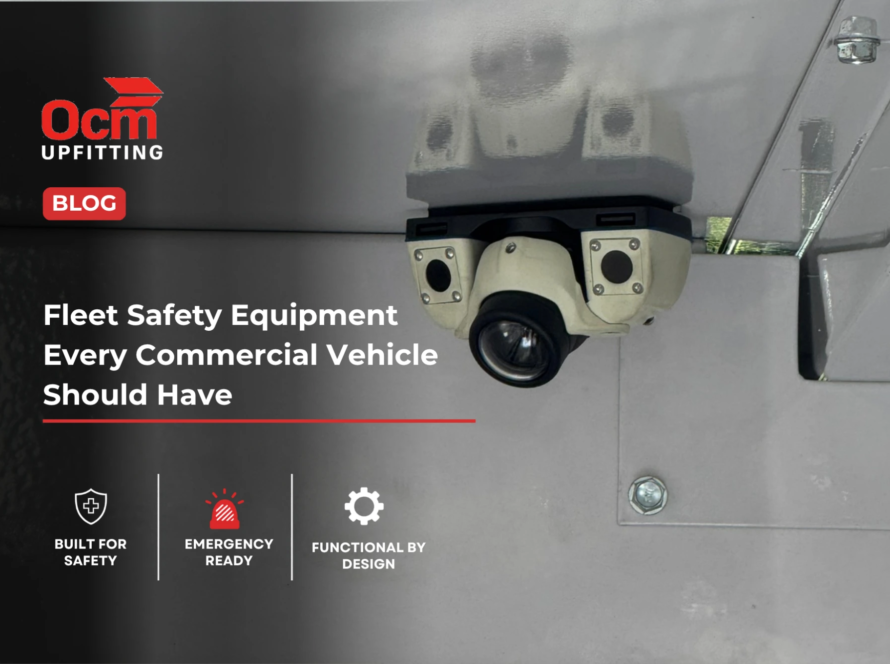
Consider a municipal fleet receiving several SUVs equipped with cameras, warning lighting, radios, and additional controls.
Months later, one vehicle develops an intermittent electrical issue.
Without documentation, the OEM dealer may see aftermarket wiring, the equipment manufacturer may focus on its camera, and the upfitter may need to reconstruct how the vehicle was originally configured.
With documented connection points, circuit protection, installed equipment, programming, inspection results, and warranty responsibilities, the fleet has a much clearer starting point for diagnosis.
The paperwork does not guarantee that a claim will be approved. It helps establish what was installed, how it was installed, and which warranty may apply.
Define the Warranty Claim Process Before Delivery
When a failure occurs, fleet staff should not have to invent a process.
A defined claim workflow can include:
- Document the symptoms and affected systems.
- Retrieve the vehicle’s upfit and warranty records.
- Determine whether diagnosis starts with the OEM dealer, equipment manufacturer, or upfitter.
- Preserve relevant components and installation evidence until responsibility is understood.
- Record diagnostic findings and corrective work.
- Track labor, shipping, removal, reinstallation, and downtime responsibilities according to the applicable agreements.
For multi-vehicle fleets, recurring failures should also be reviewed against the fleet specification. A pattern may indicate an equipment, installation, vehicle-platform, or operating issue that deserves attention before the same configuration is repeated.
Define Warranty Responsibility Before the Build Starts
A good upfit specification should explain more than what equipment goes into the vehicle. It should also establish how the fleet will protect documentation, understand warranty boundaries, and handle support after delivery.
OCM Upfitting works with organizations on vehicle configurations designed around mission requirements, equipment integration, electrical planning, fleet consistency, and long-term serviceability. The company’s current website lists nationwide fleet positioning and (954) 764-8117 as its primary contact number.
Call (954) 764-8117 to discuss your vehicles, planned equipment, specifications, warranty questions, and upcoming fleet upfit requirements before installation begins.
FAQs
Does vehicle upfitting automatically void the factory warranty?
No blanket rule should be assumed. For covered consumer warranties, federal law generally prevents denial solely because third-party parts or services were used, but damage caused by a modification may be excluded. Commercial fleet warranty terms can differ, so review the OEM’s written warranty and applicable agreements.
What is covered by an upfitter workmanship warranty?
Coverage depends on the upfitter’s written terms. Fleet managers should verify whether mounting, wiring, fabrication, connectors, programming, labor, removal, or reinstallation are included rather than assuming all installation-related issues are covered.
Does aftermarket equipment vehicle warranty coverage include labor?
Not necessarily. An equipment manufacturer’s warranty may cover repair or replacement of the product without covering diagnostic labor, shipping, removal, or reinstallation. Those responsibilities should be confirmed before purchase.
Why are OEM upfitting guidelines important?
OEM documentation can identify vehicle-specific electrical, structural, dimensional, weight, mounting, and safety considerations. Following the appropriate current guidance can help the fleet and upfitter make better-informed modification decisions and document how the vehicle was built.