Better-Equipped Vehicles Help Cities Deliver Better Service
Every municipal vehicle represents a public investment. Whether it’s supporting road repairs, maintaining parks, restoring utilities, or responding to emergencies, each vehicle should help employees work safely, efficiently, and consistently. When trucks and vans are poorly organized or equipped with inconsistent components, crews spend more time searching for tools, duplicate equipment purchases become common, and maintenance becomes more complicated.
A strategic municipal fleet upfitting program helps cities maximize every taxpayer dollar by equipping vehicles for their specific missions before they enter service. Standardized storage, lighting, safety equipment, electrical systems, and technology improve productivity while reducing downtime and long-term operating costs.
For municipalities in Fort Lauderdale and across the country, properly upfitted government vehicles improve service delivery, strengthen employee safety, simplify procurement, and support long-term fleet management. OCM Upfitting partners with government agencies to design repeatable fleet solutions that improve operations while helping departments maintain consistent vehicle standards.
What Is Municipal Fleet Upfitting?
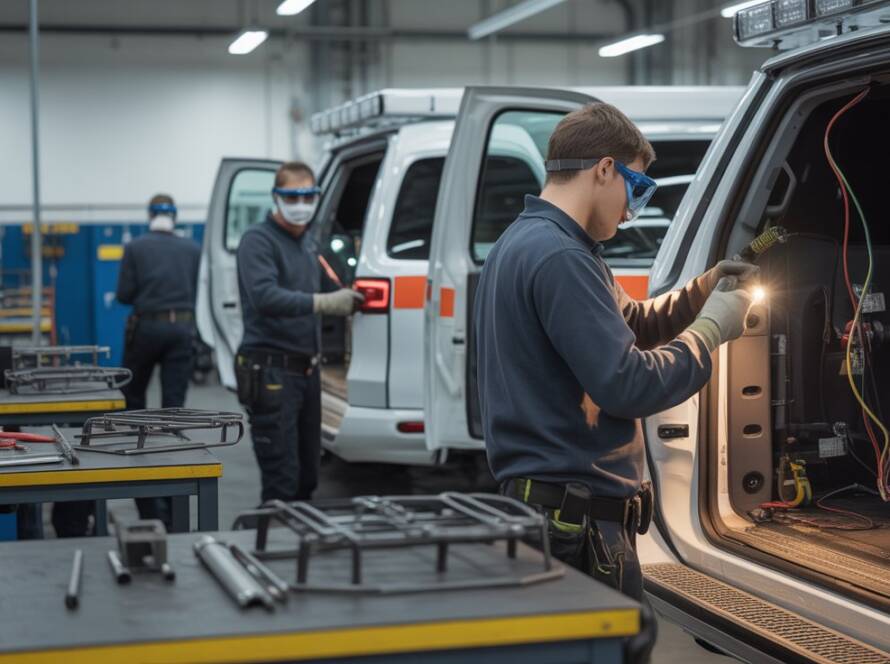
Municipal fleet upfitting is the process of customizing pickups, vans, SUVs, service bodies, trailers, and specialty vehicles to meet the operational needs of government departments.
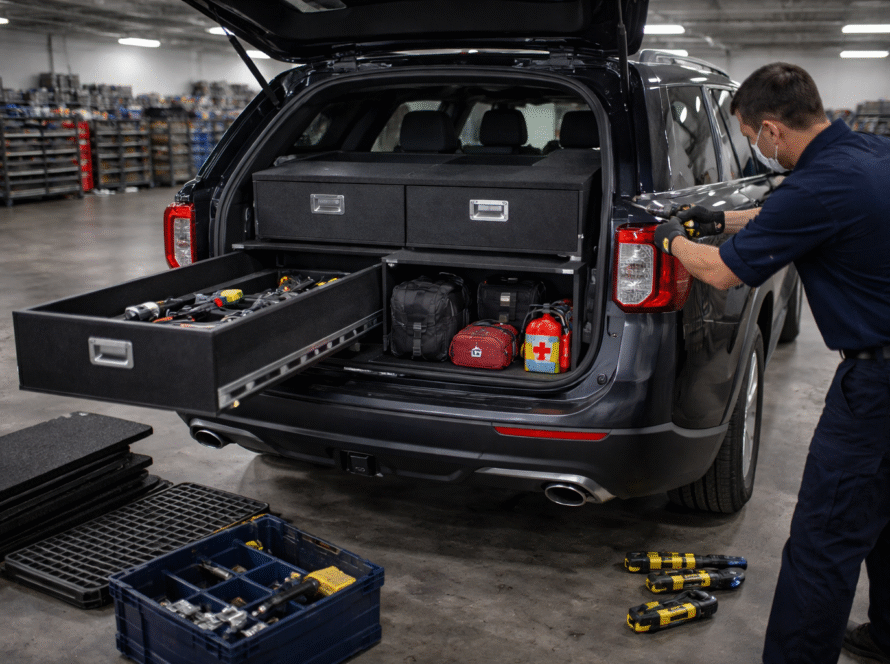
Common upfits include shelving systems, ladder racks, secure storage compartments, warning lights, scene lighting, auxiliary power, camera systems, equipment mounts, graphics, partitions, and communication technology.
The most successful city fleet upfitting programs begin by evaluating how employees actually use their vehicles rather than selecting accessories individually. Understanding daily workflows, payload requirements, operating environments, safety risks, and expected vehicle life allows municipalities to build standardized configurations that support efficient operations while reducing unnecessary costs.
Public Works Fleet Upfitting Improves Productivity
Public works departments perform a wide variety of responsibilities, including roadway repairs, traffic control, drainage maintenance, storm cleanup, inspections, and infrastructure improvements.
Crews frequently work along busy roadways, requiring equipment that improves visibility while keeping tools organized and accessible.
Recommended Public Works Upfit Features
Effective public works vehicles often include:
- Lockable storage compartments
- Traffic advisor bars
- Scene lighting
- Interior cargo lighting
- Charging ports
- Backup cameras
- Reflective graphics
- Secure equipment mounting systems
Imagine a city operating twenty public works trucks with different storage layouts. Employees regularly spend valuable time locating equipment or moving supplies between vehicles. Standardizing compartment locations, lighting controls, and equipment placement reduces training time, improves efficiency, and allows crews to complete more work orders during each shift.
OCM Upfitting works with municipalities to create repeatable vehicle packages that improve consistency while simplifying future fleet expansion.
Parks Department Vehicles Require Flexible Solutions
Parks departments often perform several functions using the same vehicles. A truck used for irrigation repairs in the morning may transport landscaping materials in the afternoon before supporting a community event later that day.
Flexible upfitting allows one vehicle to support multiple responsibilities without compromising organization or safety.
Adjustable shelving, removable storage bins, lockable compartments, long-tool storage, charging stations, and interior lighting help employees transition between assignments efficiently.
Clearly branded government fleet vehicles also improve public confidence by making crews easy to identify throughout parks, recreation areas, athletic facilities, and neighborhoods.
Modular city fleet upfitting also helps municipalities adapt to seasonal operations without purchasing additional specialized vehicles.
Utility Fleet Upfitting Improves Safety and Response Times
Water, wastewater, electrical, telecommunications, and public utility departments depend on organized vehicles to respond quickly when service interruptions occur.
Technicians often carry specialized testing equipment, repair materials, meters, electrical components, and sensitive instruments that require secure storage and weather protection.
A comprehensive utility fleet upfitting plan may include auxiliary power systems, charging stations, partitions, warning lights, cameras, equipment mounts, shelving, and advanced storage systems designed around technician workflows.
OCM Upfitting provides lighting, graphics, vehicle technology, storage systems, power management solutions, and specialty installations that help utility crews work more safely and efficiently while reducing unnecessary downtime.
When equipment has a dedicated location inside every vehicle, technicians spend less time searching for tools and more time restoring critical public services.
How Fleet Standardization Reduces Municipal Costs
Fleet standardization is one of the most effective ways municipalities control long-term operating expenses.
Without standardized specifications, similar vehicles often receive different lighting systems, shelving layouts, electrical components, storage solutions, and wiring methods. These differences increase maintenance complexity, parts inventory, technician training, and procurement costs.
The American Public Works Association emphasizes collaboration between fleet managers and vehicle users in developing effective fleet management for municipal fleets. Standardization transforms those discussions into repeatable vehicle specifications that improve consistency across departments.
Cities can establish standardized packages for public works, parks, utilities, inspections, and maintenance fleets while allowing department-specific modifications where operational requirements differ.
OCM Upfitting’s guide to fleet standardization benefits explains how repeatable fleet designs simplify maintenance, purchasing, inventory management, and employee training.
Plan the Upfit Before Vehicles Arrive
Successful municipal projects begin long before vehicles arrive at the installation facility.
Planning storage layouts, electrical systems, safety equipment, and technology during procurement helps agencies avoid costly design changes, compatibility problems, and installation delays after delivery.
OCM Upfitting works alongside procurement teams to document repeatable specifications that support long-term fleet consistency.
Budget Planning Beyond the Lowest Bid
Selecting the lowest-priced proposal rarely produces the lowest lifecycle cost.
Fleet managers should evaluate installation quality, component durability, warranty support, replacement part availability, maintenance requirements, equipment transferability, technician productivity, and long-term reliability.
The Government Finance Officers Association recommends managing public assets through a comprehensive capital asset management program. The same lifecycle approach should guide municipal upfitting decisions.
Planning before the chassis is ordered also helps prevent payload issues, electrical conflicts, scheduling delays, and expensive change orders.
Municipalities planning future fleet replacements can also benefit from fleet lifecycle decisions for commercial and public vehicles to determine whether vehicles should be upfitted, repurposed, or replaced.
The U.S. Department of Energy further recommends reviewing utilization, duty cycles, and vehicle suitability through its guide to rightsizing a vehicle fleet, ensuring every vehicle matches its intended mission before additional investments are made.
Write Better Municipal Procurement Specifications
Well-written procurement specifications reduce project risk while improving proposal quality.
Specifications should clearly define the vehicle mission, operating environment, payload requirements, electrical capacity, mounting methods, documentation, warranty expectations, inspections, delivery schedules, training requirements, and ongoing support.
The U.S. General Services Administration includes specialty vehicles, accessories, and government vehicle upfitting services within its purchasing resources. Although procurement requirements vary between agencies, clearly defined specifications help ensure consistent results.
Procurement staff, finance departments, fleet managers, safety personnel, supervisors, and field employees should collaborate before issuing bid documents.
Reviewing the hidden costs of poor fleet upfitting decisions can also help agencies avoid unnecessary maintenance expenses and operational inefficiencies.
Build Mission-Ready Government Vehicles With OCM Upfitting
Municipal fleet upfitting is about more than adding accessories. A properly designed vehicle improves safety, supports employee productivity, simplifies maintenance, and delivers better service to the public.
OCM Upfitting partners with municipalities nationwide to develop standardized fleet programs for public works, parks, utility departments, inspections, and specialty government operations. From work truck equipment and storage systems to lighting, safety technology, graphics, and complete vehicle customization, every solution is designed to improve long-term fleet performance.
Turn Better Fleet Planning Into Better Public Service
Well-planned municipal fleet upfitting helps agencies reduce lifecycle costs, improve technician productivity, simplify maintenance, and keep government vehicles ready for daily operations. Standardized builds also make future vehicle purchases easier, reduce training requirements, and create safer working environments for employees.
Whether your agency is replacing a single vehicle or modernizing an entire fleet, planning early delivers better long-term results.
Ready to build more productive government vehicles? Contact OCM Upfitting to discuss municipal fleet standards, procurement planning, and mission-ready vehicle solutions designed to serve communities more efficiently.
Frequently Asked Questions
What equipment is commonly included in a municipal vehicle upfit?
Typical upfits include shelving, lockable storage, ladder racks, warning lights, scene lighting, auxiliary power, camera systems, partitions, graphics, charging systems, and specialized equipment mounts.
How does fleet standardization reduce costs?
Standardization simplifies maintenance, reduces inventory, improves technician training, creates purchasing consistency, and makes future fleet expansion easier.
When should municipalities begin planning vehicle upfits?
Planning should begin before vehicles or chassis are ordered so agencies can confirm payload capacity, electrical requirements, installation schedules, compatibility, and long-term budget needs.
Can standardized fleet packages still meet different department needs?
Yes. Municipalities can establish core standards for safety, electrical systems, lighting, and documentation while allowing department-specific equipment based on operational requirements.