Rural emergency lighting plays a critical role in how quickly and safely first responders can reach people in need. Whether it’s a sheriff’s truck on a county road or a rescue vehicle navigating city traffic, proper light bar placement can make the difference between visibility and danger.
Emergency response vehicles operate in vastly different environments depending on whether they serve rural highways or dense urban streets. Because of these differences, the way light bars are installed and positioned must be carefully planned. Proper lighting placement improves visibility, reduces accident risk, and ensures emergency vehicles are noticed immediately by other drivers.
Why Light Bar Placement Matters
Emergency lighting is designed to communicate urgency and visibility. However, the placement of the light bar on a vehicle determines how effectively that message reaches drivers, pedestrians, and other responders.
In rural areas, long distances, high-speed traffic, and limited street lighting require lights that can be seen from far away. In contrast, urban environments often involve heavy traffic, intersections, and visual distractions like buildings and streetlights.
Organizations that specialize in professional vehicle builds, such as OCM Upfitting, offer customized fleet solutions to ensure emergency vehicles are equipped with lighting systems that match their operational environment.
Without proper placement, even the most powerful lighting system may fail to deliver the visibility first responders need.
Lighting Needs for Rural Emergency Vehicles
Rural response vehicles face unique visibility challenges. Emergency crews often travel on dark highways, winding country roads, and unlit areas where visibility is already limited.
Long-Distance Visibility
One of the most important factors in rural emergency lighting is distance recognition. Drivers must be able to see the emergency vehicle long before they approach it. This allows them time to slow down, move aside, or stop safely.
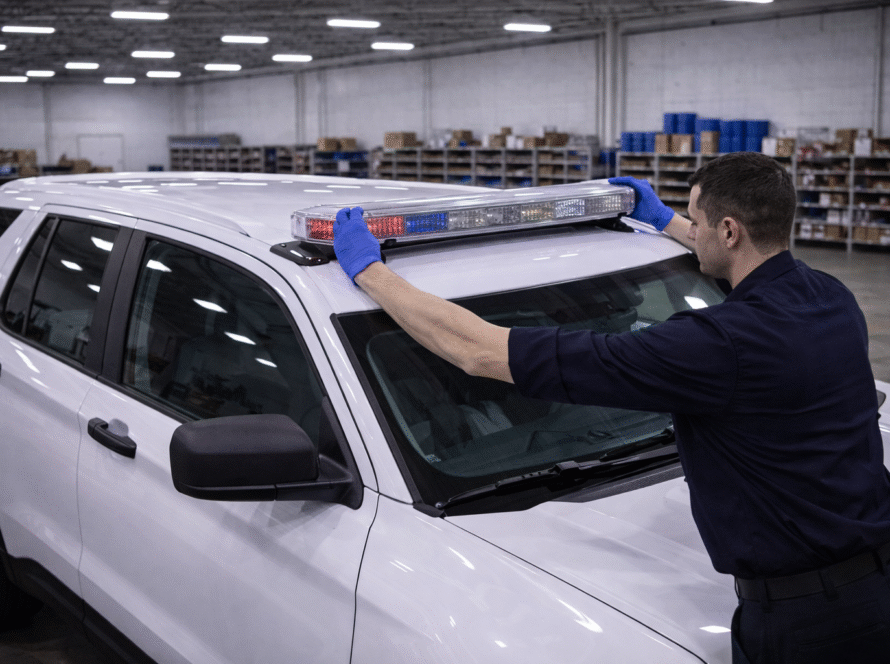
Roof-mounted light bars are typically positioned higher and more centered on rural vehicles to maximize the viewing distance.
360-Degree Warning Coverage
Because rural roads may not have controlled intersections or predictable traffic flow, emergency vehicles must be visible from every angle.
Full perimeter lighting—including front, rear, and side lights—helps ensure approaching vehicles can quickly identify an emergency situation.
Reduced Ambient Light
Unlike cities, rural areas rarely have strong ambient lighting from buildings or street lamps. This means emergency lighting must be powerful enough to stand out clearly in dark environments.
Higher placement and wider light dispersion are often used to improve visibility on open roads.
Lighting Considerations for Urban Response Vehicles
Urban emergency vehicles operate in a very different environment. Heavy traffic, multiple intersections, and bright city lights can make emergency vehicles harder to notice.
Proper light bar placement helps overcome these challenges.
Traffic-Level Visibility
In cities, many vehicles—including trucks, buses, and SUVs—can block a driver’s line of sight. For this reason, urban emergency vehicles often use a combination of roof lighting and grille lighting.
Lower-level lights help drivers stuck in traffic recognize emergency vehicles even when their view of the roof bar is obstructed.
Intersection Warning
Urban intersections are one of the most common locations for emergency vehicle accidents.
Strategic light placement—especially forward-facing lighting and corner lights—helps warn drivers approaching from multiple directions.
Reduced Glare
In dense urban environments, too much lighting can cause glare and visual overload. Carefully positioned lighting helps maintain strong visibility without overwhelming drivers.
Common Light Bar Placement Options
Different emergency vehicles use different mounting strategies depending on their role and environment.
Roof-Mounted Light Bars
This is the most common and recognizable setup. Roof placement provides the best overall visibility and ensures lights can be seen from a distance.
Rural response vehicles frequently rely on this placement because it maximizes long-range visibility.
Grille Lighting
Grille lights are especially useful in urban settings where traffic congestion may block roof-mounted lights.
They help alert drivers who are directly ahead of the emergency vehicle.
Rear Deck Lighting
Rear lighting is essential for protecting responders who stop on the roadside. Vehicles approaching from behind must immediately recognize the emergency situation.
This is particularly important for rural highways where vehicles may approach at high speeds.
Side Lighting
Side warning lights improve visibility at intersections and during roadside operations. This helps protect responders when they are working outside their vehicles.
Choosing the Right Setup for Your Fleet
There is no universal lighting configuration that works for every emergency vehicle. Each department must consider the environments where their vehicles operate most often.
Factors to evaluate include:
-
Rural vs urban response area
-
Average traffic speed
-
Road lighting conditions
-
Vehicle type and size
-
Operational role of the vehicle
Professional vehicle upfitting providers can design lighting systems that balance visibility, safety, and compliance with state regulations.
Custom installation ensures that lighting systems perform effectively in real-world emergency situations.
The Role of Professional Vehicle Upfitting
Proper emergency lighting installation goes far beyond simply attaching a light bar to a roof. The positioning, wiring, and synchronization of lights must all be carefully engineered.
Professional upfitting services evaluate how the vehicle will be used and recommend lighting configurations that improve safety and response effectiveness.
Working with experienced installers ensures that emergency vehicles are not only highly visible but also compliant with state and federal vehicle standards.
Final Thoughts
Light bar placement plays a critical role in the safety and effectiveness of emergency response vehicles. Rural areas require lighting systems that maximize long-distance visibility, while urban environments demand strategic placement that cuts through traffic and visual clutter.
By understanding these differences and equipping vehicles with properly installed lighting systems, emergency services can improve response efficiency and protect both responders and the public.