When managing a fleet, choosing the right emergency lighting systems is one of the most critical safety decisions you’ll make. From fleet lighting, sirens, and light bars, the right setup ensures that your vehicles remain visible, compliant, and fully functional in demanding situations. But with so many options available, how do you determine which solution best fits your fleet’s needs?
In this guide, we’ll walk you through key considerations, types of systems, and expert tips for selecting the best emergency lighting setup for your vehicles. For professional installation and customized solutions, National Upfitting services provides end-to-end support for fleets across the United States.
Why Emergency Lighting Systems Matter
Emergency lighting isn’t just about visibility; it’s about safety, compliance, and efficiency. Whether you operate utility trucks, law enforcement vehicles, fire response units, or service vans, your lighting systems serve three purposes:
-
Enhancing visibility: Clear visibility on roadways and job sites reduces accidents and ensures other drivers can see your vehicles from all directions.
-
Meeting regulations: Emergency vehicles must meet federal and state lighting requirements. Non-compliance could result in penalties or operational downtime.
-
Improving response times: Effective lighting combined with sirens communicates urgency, allowing your team to move quickly and safely through traffic.
Key Types of Emergency Lighting Systems
1. Full-Length Light Bars
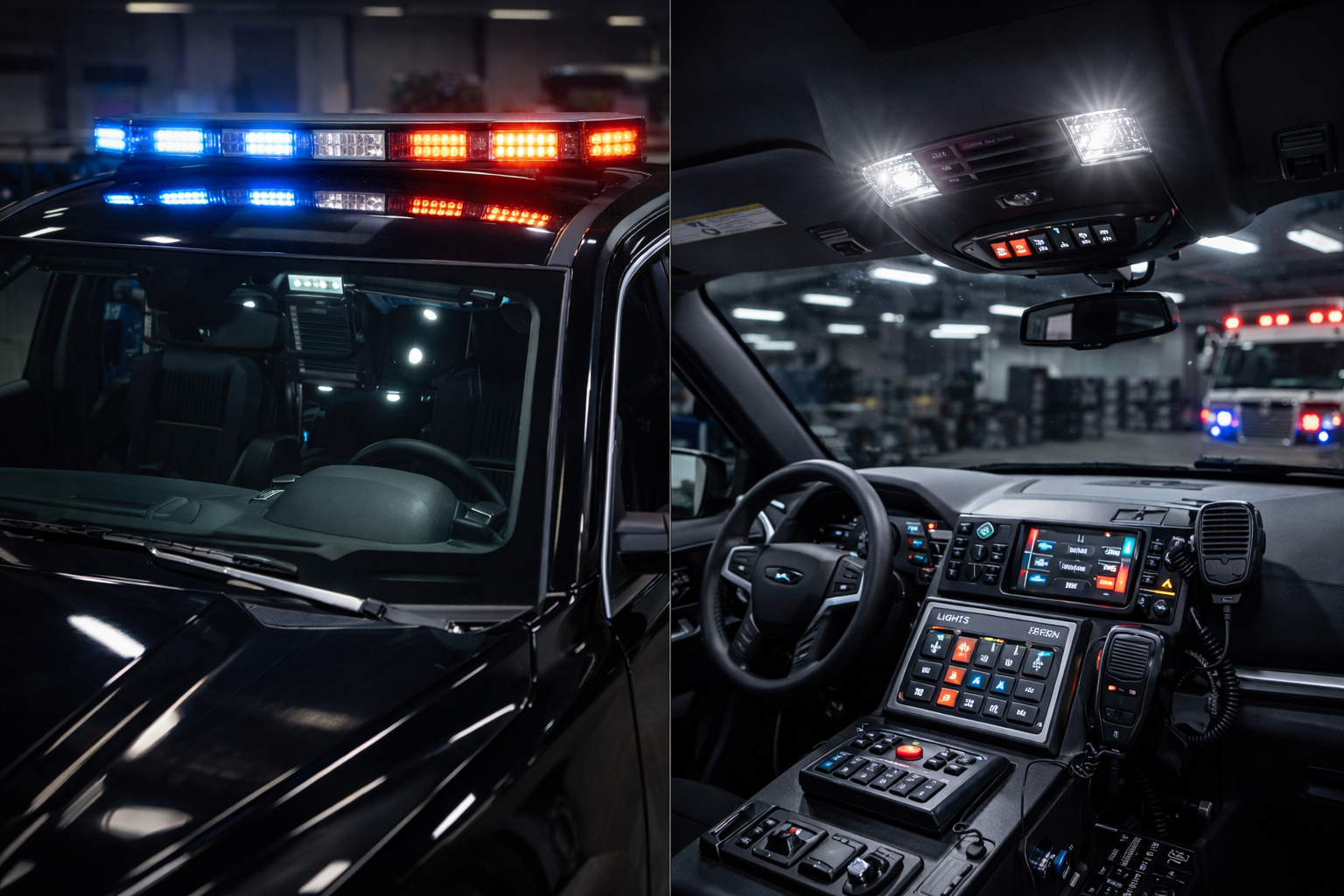
Light bars are a staple of fleet lighting. Mounted on top of the vehicle, they provide high-intensity visibility from multiple angles. Options include LED, halogen, and hybrid systems. LED light bars are preferred for their brightness, durability, and energy efficiency.
Best for: Law enforcement, utility fleets, and emergency response vehicles needing maximum visibility.
2. Hideaway & Intersection Lights
Hideaway lights are installed within headlights or taillights, while intersection lights are mounted on the sides of vehicles. Both enhance side visibility, which is especially valuable at intersections where accidents are most common.
Best for: Police cruisers, service vans, and tow trucks operating in high-traffic areas.
3. Dash & Deck Lights
Dash and deck lights are compact, versatile, and often used as supplemental lighting. They can be easily installed and are a budget-friendly option for smaller fleets or secondary vehicles.
Best for: Support vehicles or smaller fleets that don’t require full light bars.
4. Traffic Advisors & Directional Warning Lights
Traffic advisor systems guide motorists safely around stopped vehicles. They are essential for fleets that frequently operate roadside, such as construction or utility crews.
Best for: Roadside service fleets, tow operators, and public works vehicles.
5. Sirens & Audible Warning Systems
Pairing emergency lighting with sirens creates a complete warning system. Sirens alert drivers audibly while lighting provides the visual cue. Together, they maximize safety and response effectiveness.
Best for: Law enforcement, fire, EMS, and other high-priority emergency fleets.
Factors to Consider When Choosing Fleet Lighting
Selecting the right system goes beyond picking a style—it’s about aligning equipment with your operational needs.
-
Fleet Purpose: Emergency response vehicles require high-output systems, while service fleets may prioritize directional lighting for roadside safety.
-
Regulatory Compliance: Federal and state rules govern color, brightness, and placement. Partner with experts who understand regional regulations.
-
Durability & Maintenance: Weatherproofing, vibration resistance, and ease of replacement are vital for long-term cost savings.
-
Energy Efficiency: LED systems reduce power draw, protecting your vehicle’s battery and electrical system.
-
Installation Quality: Professional installation ensures wiring, mounting, and placement optimize performance while avoiding vehicle damage.
Benefits of Professional Fleet Lighting Installation
While DIY options exist, professional upfitting ensures:
-
Compliance with DOT and state regulations
-
Optimized performance tailored to your fleet
-
Reliable wiring and mounting for durability
-
Access to industry-leading warranties and support
That’s where National Upfitting comes in. With certified technicians and experience across diverse industries, we design and install emergency lighting systems that meet your exact requirements.
Future Trends in Fleet Lighting
Technology continues to evolve, and the future of emergency lighting is brighter—literally. Expect to see:
-
Smart lighting systems with programmable patterns
-
Eco-friendly LEDs with longer lifespans
-
Integrated control systems for seamless use of lights, sirens, and communication tools
Staying ahead of these trends ensures your fleet remains safe, compliant, and efficient for years to come.
Final Thoughts
The right emergency lighting system is not just equipment—it’s a safeguard for your fleet, your employees, and the public. Whether you need powerful light bars, intersection lighting, or integrated sirens, the key is matching your system to your operational goals and compliance needs.
Ready to upgrade your fleet with reliable emergency lighting systems? Trust the experts at National Upfitting for professional installation and customized solutions. Don’t wait—book your appointment today and keep your vehicles safe, compliant, and road-ready.